
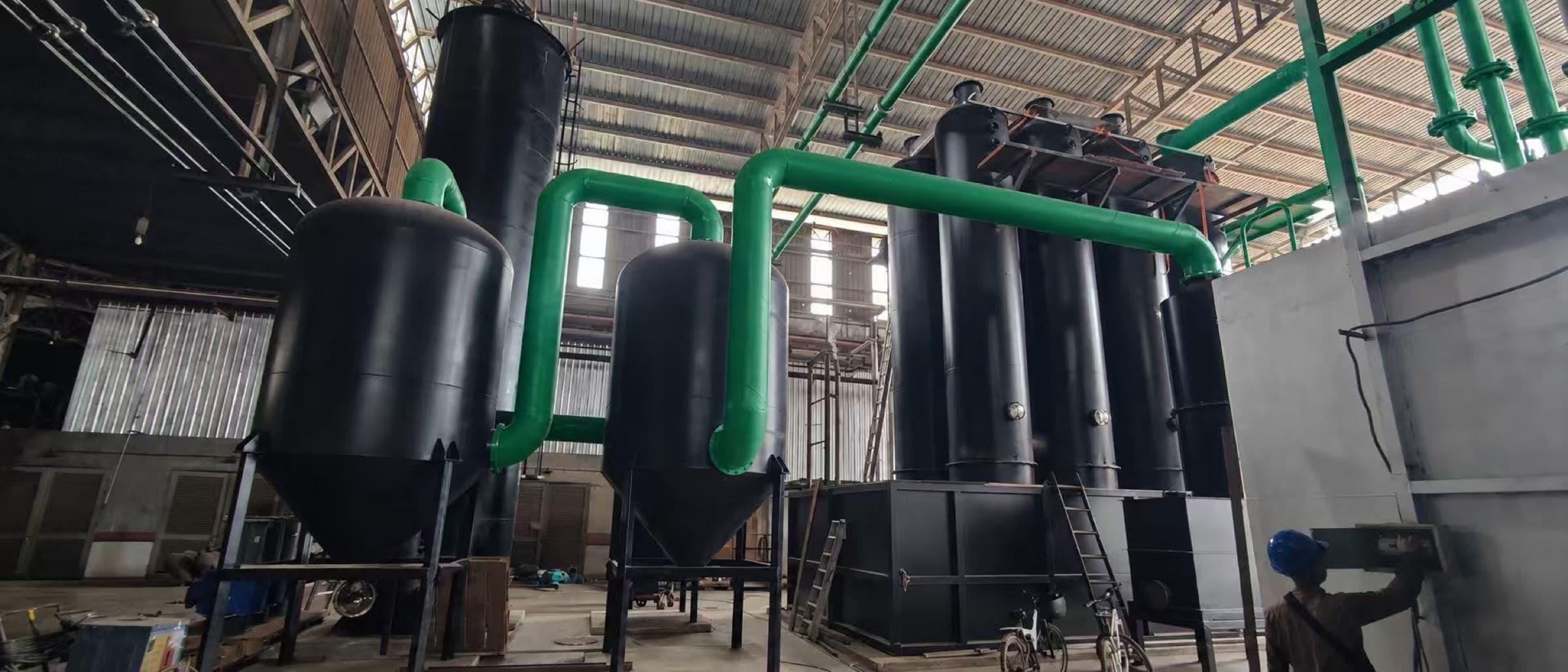
Of all the industries that could generate their own energy from residues, wood processing may be the most obvious fit. A plywood mill or sawmill produces fuel every hour it runs, needs large amounts of electricity for saws, peelers, presses and conveyors, and needs heat for veneer dryers, hot presses and kilns. The fuel, the power demand and the heat demand are all on the same site.
What a wood processor produces
Depending on the operation, residues include:
- Offcuts and trim — dry, dense and easy to chip;
- Sawdust and sanderdust — fine, dry, and often a nuisance to handle;
- Bark — wetter, variable, and often the largest volume at log intake;
- Peeler cores and rejected veneer in plywood mills;
- Chips from log breakdown.
A significant share of each log that enters a mill leaves as residue rather than product. Some is sold to board plants or as fuel; much is burned in old boilers at low efficiency, stockpiled or hauled away at a cost.
Two energy loads, one plant
Wood processing has an unusual combination of loads:
| Load | Typical uses |
|---|---|
| Electricity | Log handling, saws, peeling lathes, chippers, conveyors, hydraulic presses, dust extraction, compressors |
| Heat | Veneer dryers, hot presses, drying kilns, glue preparation, space heating |
A power-only plant captures part of the value in the residue. A combined heat and power (CHP) plant captures much more, because the heat that a power plant would otherwise reject is exactly what the dryers and presses need.
Replacing two bills at once
The economic case for onsite energy in wood processing usually rests on two savings together:
- Electricity bought from the grid is replaced by power from the plant.
- Boiler fuel — coal, heavy fuel oil, diesel or gas in many mills — is replaced by recovered heat.
Add the avoided cost of disposing of residue, and the case can be strong even where grid tariffs are moderate. Where tariffs are high or rising — as in Malaysia after the July 2025 reset — it becomes compelling. See our analysis of Malaysia's tariff changes.
Replacing an old boiler house
Many wood processors already burn residue — in ageing boilers that raise steam for dryers and presses. Those boilers are often inefficient, labour-intensive and hard to keep within emission limits. An onsite CHP plant changes the role of the boiler house:
- Base steam comes from recovered heat in the new plant.
- Peak steam can still come from an existing boiler during the transition, or from a smaller replacement.
- Residue that fed the old boilers is redirected to the plant, where it produces electricity as well as heat.
The result is more useful energy from the same residue, fewer people shovelling fuel, and a cleaner stack.
Handling the awkward residues
Not all wood residue is equally easy to use:
- Sawdust and sanderdust are fine and can create dust hazards; they need enclosed handling and may be pelletised or blended.
- Bark is wet and variable, often with soil and stones; it benefits from screening and drying.
- Glued or treated wood — plywood and panel trim — needs its composition checked, because adhesives and treatments affect emissions and ash. Most untreated plywood trim is manageable with the right gas cleaning; treated timber may need to be kept out of the fuel.
Good fuel preparation — chipping, screening, blending and drying — turns a mixed residue stream into a consistent fuel.
A lower-carbon product
Buyers of wood products, particularly in export markets, increasingly ask about the carbon footprint of what they buy. Replacing coal-fired process heat and grid electricity with energy from the mill's own residue materially reduces the footprint of every sheet of plywood or cubic metre of timber. The biochar recovered from the plant can add verified carbon removal on top.
What to check before you start
- Residue volumes by type, and how they vary through the year.
- Moisture: dry offcuts and sawdust need little preparation; bark and green chips may need drying, which recovered heat can provide.
- Electrical load profile: hours of operation, peak and base load.
- Heat demand: steam pressure and temperature, hot oil or hot water, hours of use.
- Existing boilers: age, fuel, condition, and whether they will be retired or kept as backup.
- Space: room for the plant and fuel storage near the dryers and presses.
A CNP project at a plywood mill
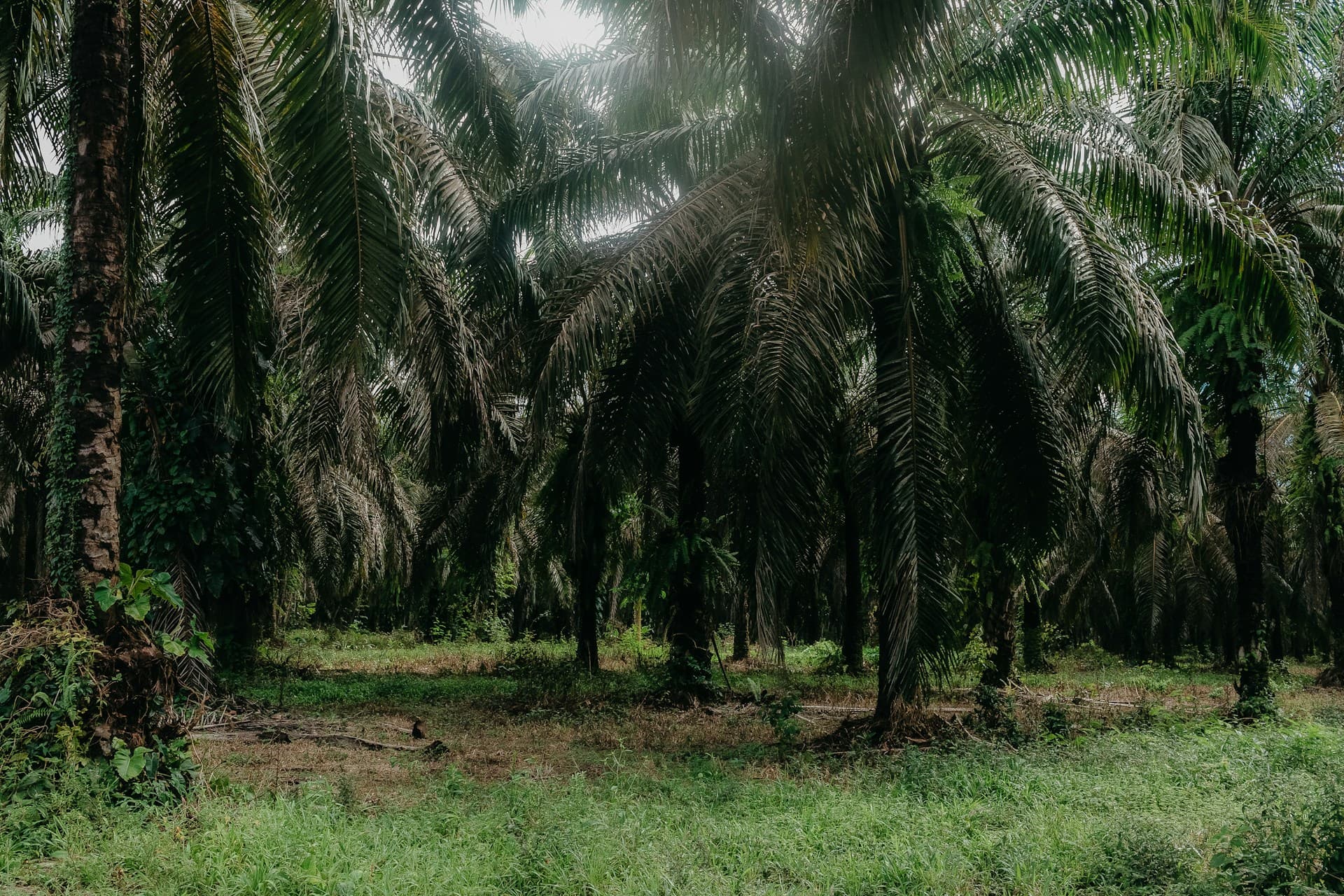
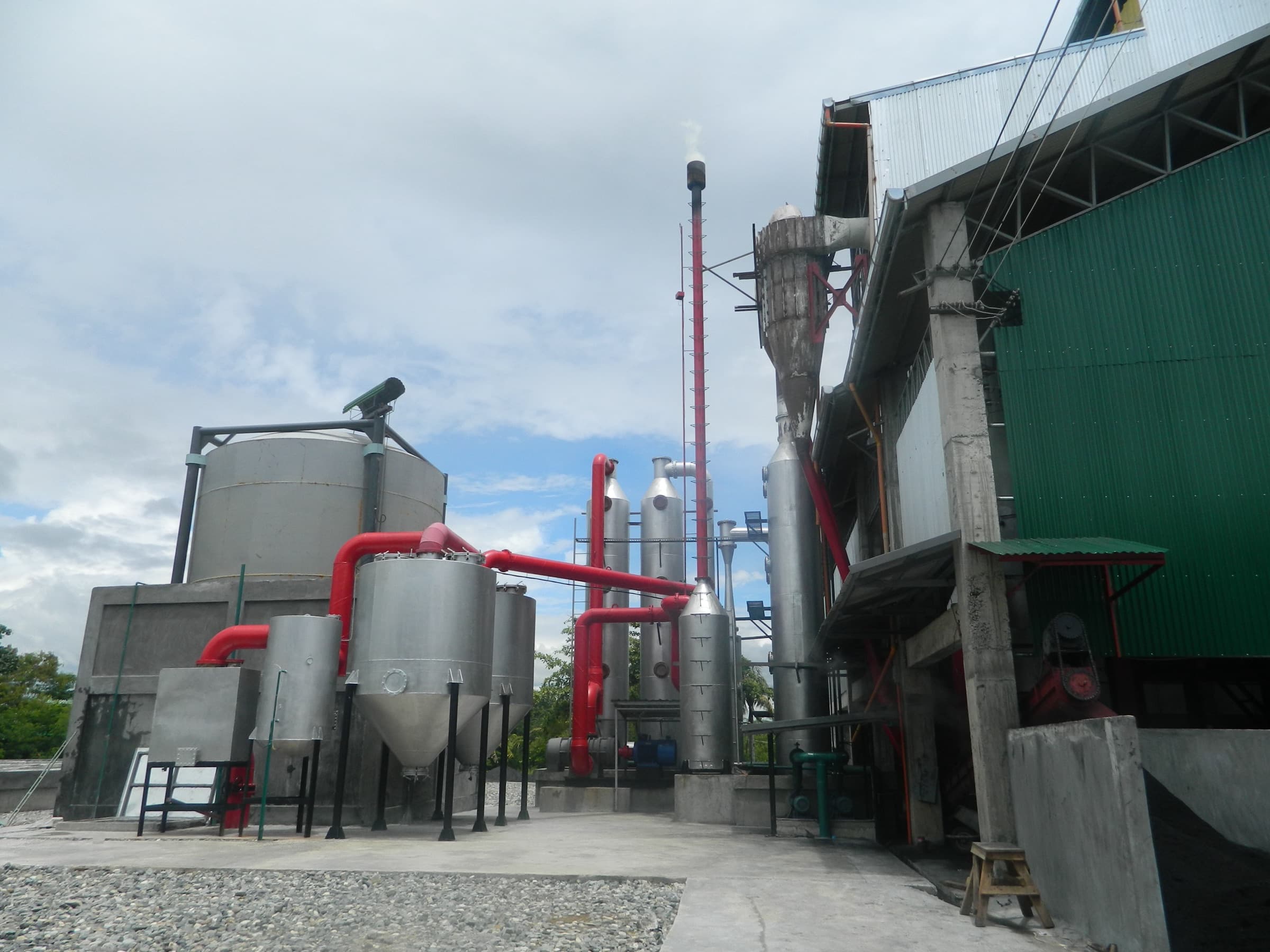
CNP is commissioning an onsite plant at Asia Green Wood's plywood mill in Penang, Malaysia, to supply electricity and contracted process steam from the mill's residues and local plantation wood. See the Penang project and Forestry & Wood Processing.
Next step
Assess your mill — tell us your residue volumes, power demand and heat use, and we will tell you what an onsite plant could supply.
.jpeg&w=3840&q=75&dpl=dpl_2bpPVygwgPQFboagi83JJUUTzgn8)