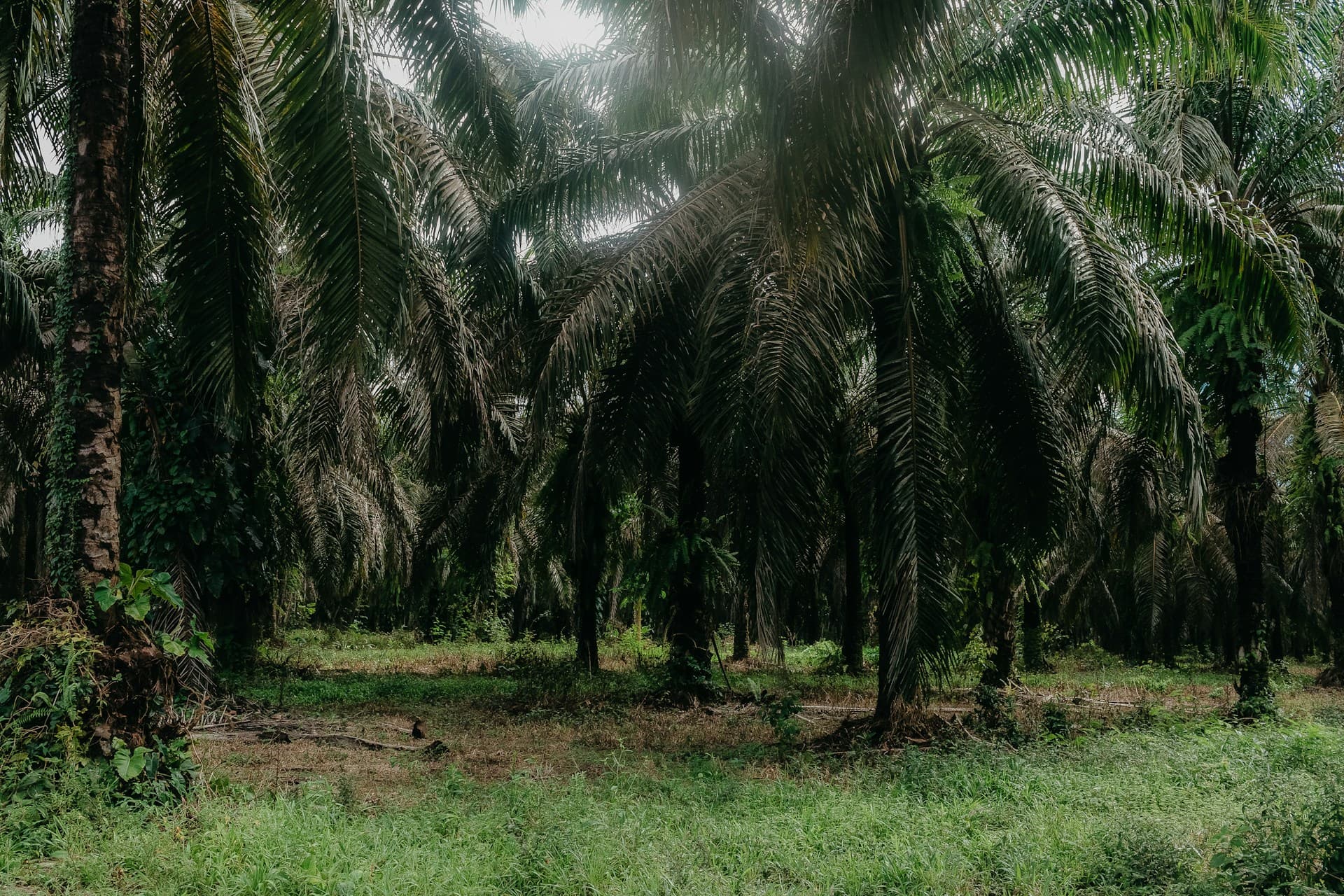
Palm oil mills are among the few industrial sites that produce their own fuel as a matter of course. Every tonne of fresh fruit bunches (FFB) that comes through the gate leaves behind residues with real energy value. The question is how much of that value the mill captures.
What a mill produces
Commonly cited industry figures put the residues from each tonne of FFB at roughly:
- Empty fruit bunches (EFB): around 20–23% by weight, very wet as produced;
- Mesocarp fibre: around 13–14%;
- Palm kernel shell (PKS): around 5–7%, dense and dry.
Mills also produce palm oil mill effluent (POME), which can be digested to biogas — a separate pathway from the solid residues discussed here.
How mills use them today
Most mills burn fibre and some shell in boilers to raise steam for sterilisation and to drive a steam turbine for part of the mill's electricity. The rest of the residue stream is often under-used:
- EFB is frequently returned to plantations as mulch, stockpiled or burned inefficiently, because its high moisture makes it a difficult boiler fuel.
- Surplus shell is sold to third parties, often exported, at a price well below its energy value to the mill.
- Electricity outside processing hours, and for estates, housing and neighbouring operations, still comes from the grid or diesel.
What a modern onsite plant changes
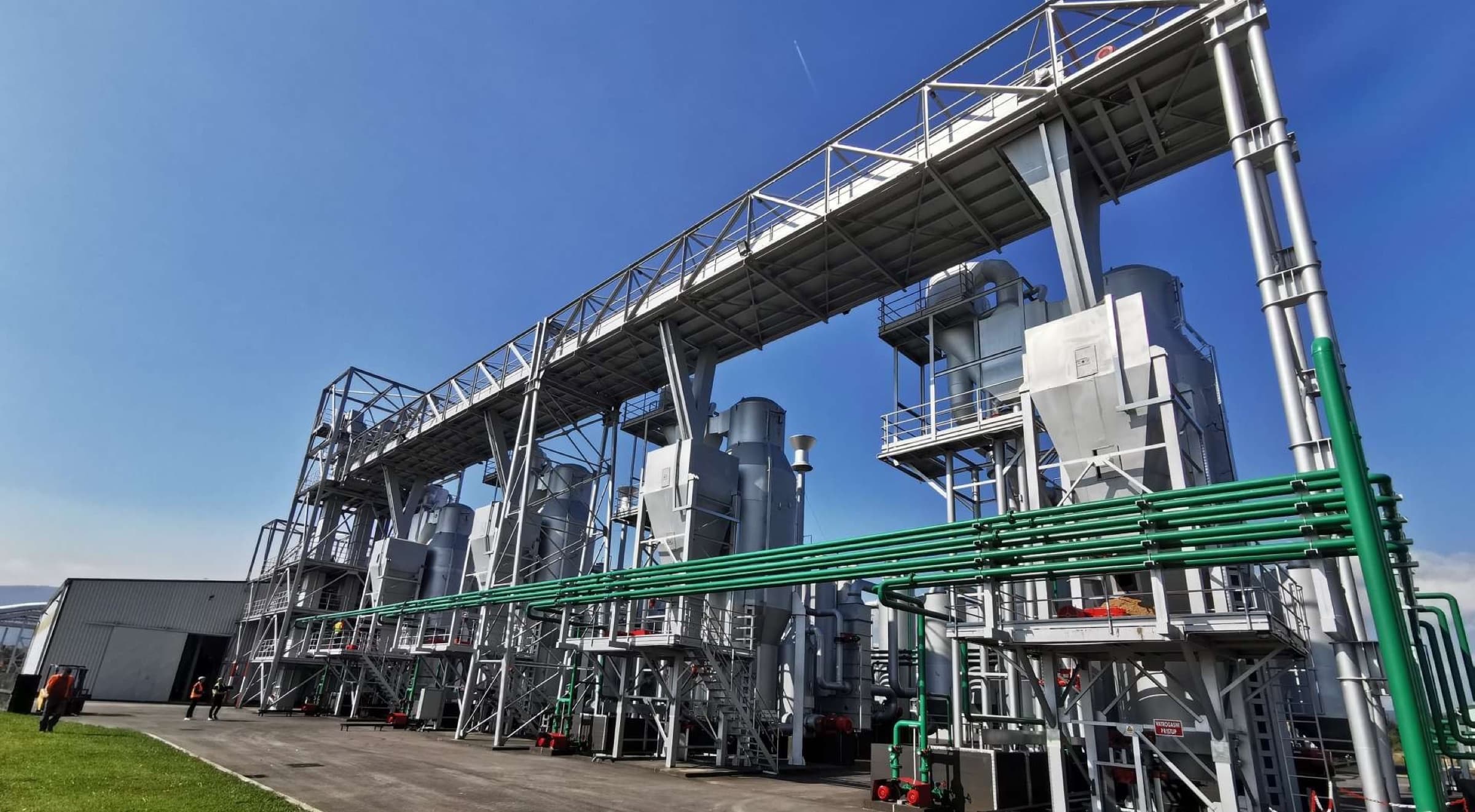
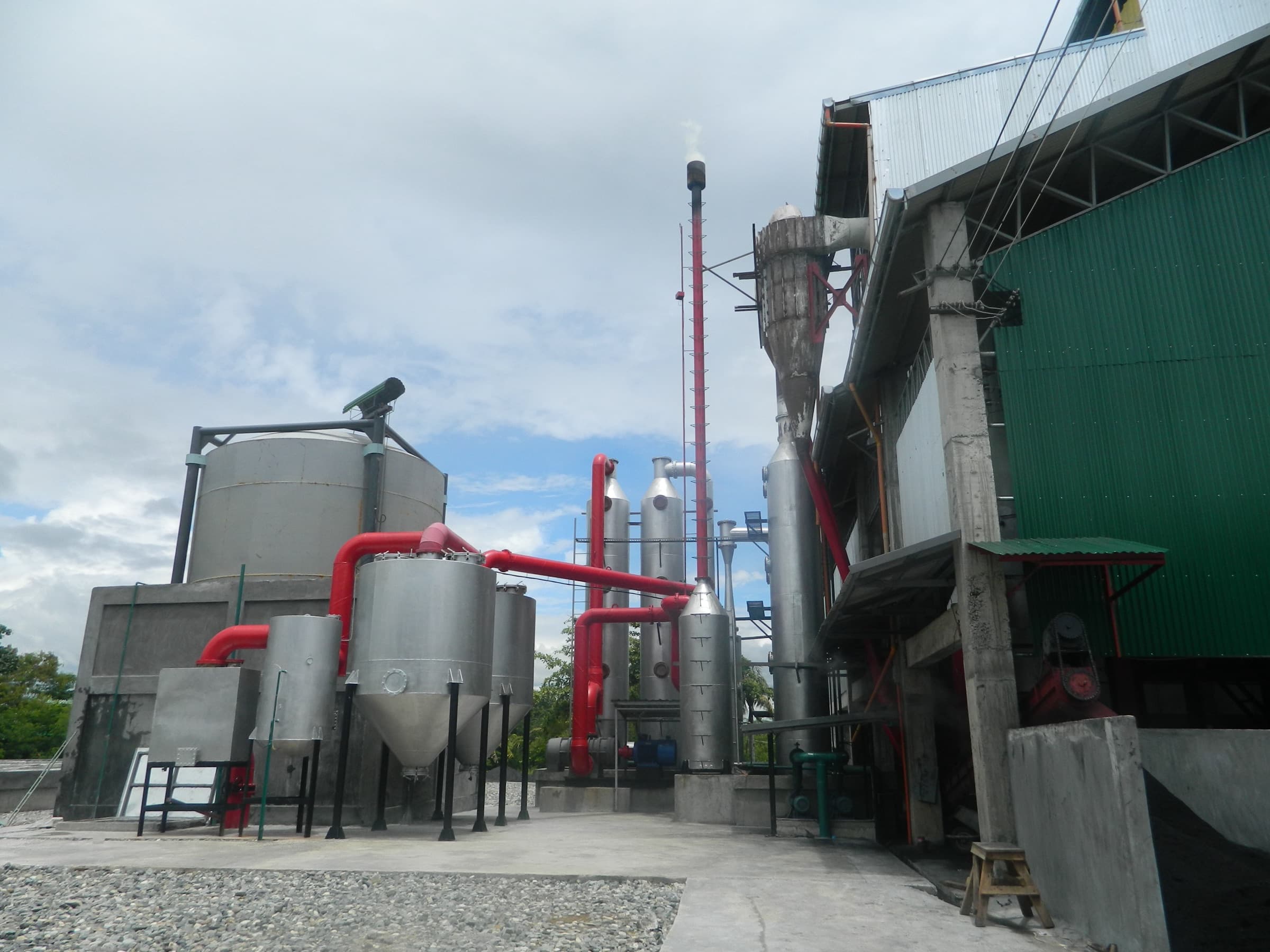
A gasification-based plant sized to the mill's residue stream can:
- generate continuous electricity, not only while the mill is processing;
- supply steam for the mill from recovered heat;
- use EFB as fuel once it has been prepared;
- supply surplus power to estates, neighbouring operations or the grid where rules allow;
- recover biochar, which can return to plantations as a soil amendment and qualify as carbon removal.
Under an Energy-as-a-Service agreement, the mill does not fund the plant; it supplies the residue and buys the energy.
The design issue: preparing EFB
EFB as it leaves the thresher can be more than 60% moisture and is fibrous and bulky. Burning or gasifying it efficiently needs:
- Shredding to a consistent size;
- Pressing to remove free water and residual oil;
- Drying, ideally using recovered heat from the plant itself.
Getting this step right is the difference between a plant that runs reliably and one that struggles. It is the first thing to assess.
Where the value comes from
For a typical mill, an onsite plant creates value in several places at once:
| Source of value | How it arises |
|---|---|
| Grid electricity replaced | Continuous power for the mill, including outside processing hours |
| Estate and community supply | Power for housing, workshops and neighbouring operations that today rely on grid or diesel |
| Steam | Recovered heat replaces fibre and shell burned in old boilers, freeing residue for power |
| Residue value | EFB and surplus shell used on site instead of stockpiled or sold cheaply |
| Biochar | Returned to plantations as a soil amendment, and a potential source of verified carbon removal |
Not every mill captures all five. The assessment establishes which apply at your site.
Working with the existing boiler house
Most mills already have boilers and a steam turbine. A new plant does not have to replace them on day one. Common approaches include:
- Parallel operation. The new plant supplies base electricity and some steam, while the existing boiler continues to meet peak steam demand during processing.
- Staged retirement. As the new plant proves itself, older boilers move to standby and are eventually retired.
- Fuel reallocation. Fibre and shell that were burned inefficiently in old boilers are redirected to the more efficient plant.
This lowers risk for the mill: the steam supply the process depends on is never left without a backup.
Sustainability certification
Many mills operate under RSPO or national certification schemes, and buyers increasingly ask about greenhouse gas emissions per tonne of crude palm oil. Replacing grid electricity and open-burned or stockpiled EFB with a controlled, efficient plant supports those reporting requirements. Returning biochar to plantations adds a soil health story that is easy to document.
Questions to answer before you start
- What is the mill's annual throughput, and how seasonal is it?
- How much fibre and shell is burned today, and how much is sold?
- Where does EFB go today, and are there commitments to return it to plantations?
- What is the mill's electricity consumption inside and outside processing hours?
- Are there estates, housing or neighbouring industries that could take surplus power?
- What are the grid connection and export rules at the site?
How CNP works with mills
CNP develops, finances, builds and operates onsite plants for agricultural processors, fuelled by the residues they produce. See Agricultural Processing and our analysis of Malaysia's industrial tariff changes.
Next step
Assess your mill — share your throughput and residue use, and we will estimate what an onsite plant could supply.
.jpeg&w=3840&q=75&dpl=dpl_8omWQr2dmx9eNa5YGxR721ZE6K6N)