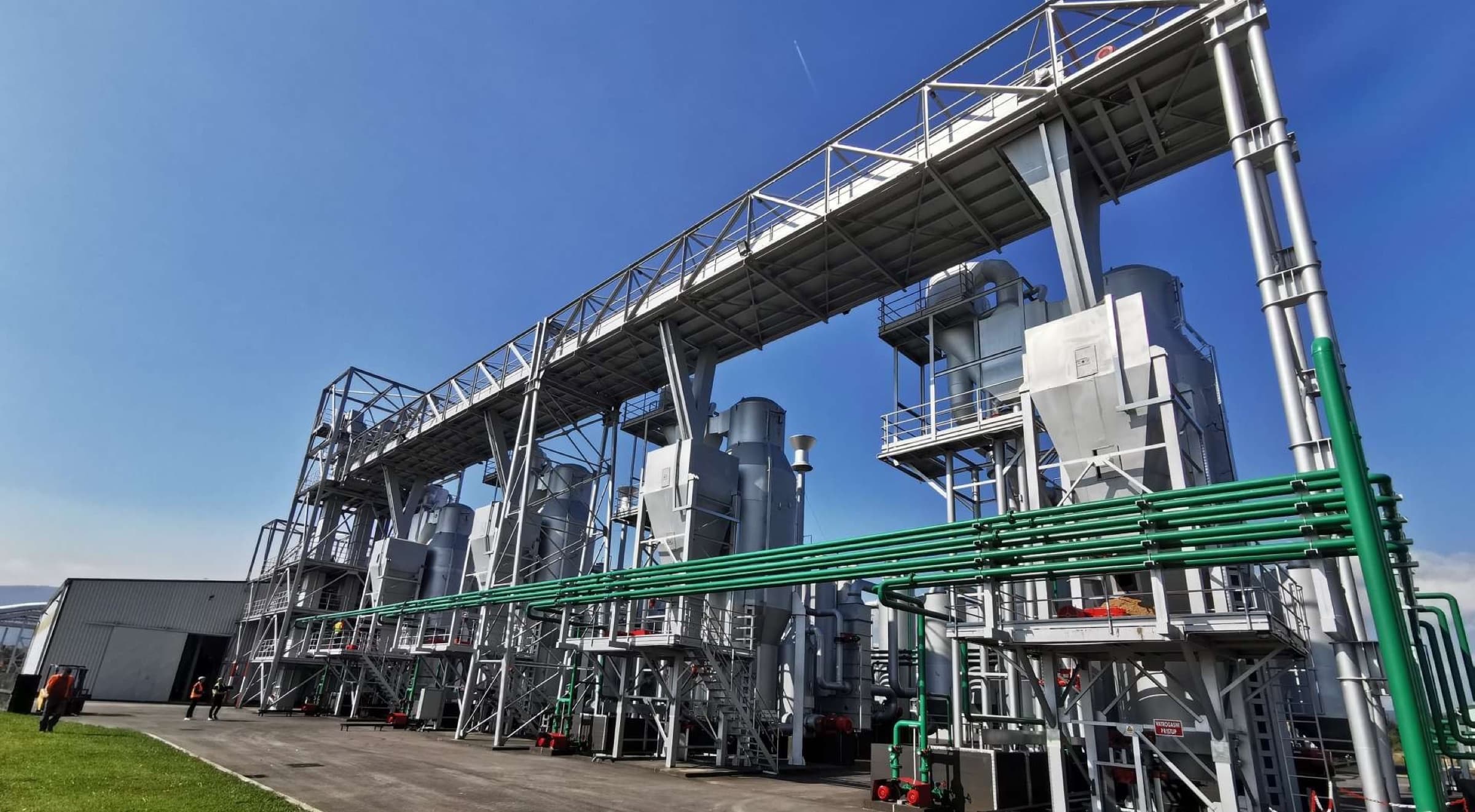
Rice milling produces one residue in volume: husk. It is generated wherever paddy is milled, it has to go somewhere, and in many regions it is still dumped, burned in the open or sold for very little. It is also a reliable fuel.
How much husk a mill produces
Husk makes up around 20% of paddy by weight. A mill processing 100 tonnes of paddy a day generates roughly 20 tonnes of husk a day — every day it runs. Unlike many agricultural residues, it is produced at the mill itself, so there is no collection or haulage.
Husk as a fuel
Rice husk has properties that make it a good fuel for onsite generation, with one caveat:
- Dry. Typically around 10% moisture, so it needs little or no drying.
- Consistent. Particle size and composition vary little.
- Moderate energy content. Commonly quoted at around 13–15 MJ/kg — lower than wood, but predictable.
- High ash. Around 15–20% ash, mostly silica. The plant has to be designed to handle it.
The ash is the key engineering issue. A plant designed for wood will struggle with husk. A plant designed for husk handles the ash continuously and turns it into a product.
Biochar and ash as products
When husk is gasified, the residue is a silica-rich biochar. Depending on the process conditions, it can be used as:
- a soil amendment for rice paddies and other crops, returning carbon and silica to the land;
- a supplementary material in cement and concrete;
- an industrial input for insulation and filtration.
Where it qualifies, the biochar can also generate verified carbon removal. See how biochar carbon removal is measured.
Power and heat for the mill
Rice mills use electricity for hulling, whitening, polishing, conveying and sorting — and many have paddy dryers that burn husk or diesel for heat. An onsite plant can supply:
- continuous electricity for the mill, replacing grid purchases;
- recovered heat for drying, displacing fuel used today;
- surplus power for neighbouring users or export, where allowed.
A rough sizing calculation
To get a first feel for what your husk could supply, a simple energy balance helps. This is illustrative only; a real design uses measured fuel properties and the actual plant efficiency.
- A mill milling 100 tonnes of paddy a day produces about 20 tonnes of husk a day.
- At around 14 MJ/kg, that is roughly 280 GJ of fuel energy a day, or an average of about 3.2 MW of fuel input if the plant runs around the clock.
- A gasification plant with gas engines typically converts somewhere in the range of a fifth to a quarter or more of that fuel energy into electricity, so the husk could support in the order of 0.7–0.9 MW of continuous electrical output.
- Much of the remaining energy is recoverable as heat — useful for paddy drying.
If the mill's own husk is not enough to meet its load, husk from neighbouring mills can often close the gap.
Pooling husk from neighbouring mills
Rice milling tends to cluster. Where several mills operate within a short distance, a larger plant fed by pooled husk can be more economic than several small ones. The practical questions are haulage cost, storage, contracts with the supplying mills, and who takes the power. In some markets a larger plant can export surplus to the grid or supply other users nearby.
Common pitfalls
- Designing for wood, running on husk. Ash handling and slagging behaviour are different; the plant must be designed for husk from the start.
- Ignoring seasonality. Harvest cycles change milling throughput. Storage and blending smooth the fuel supply.
- Treating biochar as waste. Silica-rich char has value as a product and, where it qualifies, as carbon removal. Plan its offtake up front.
- Underestimating dust. Husk handling creates fine dust; enclosed conveying and good housekeeping matter for safety and reliability.
Questions to answer first
- How many tonnes of paddy does the mill process a year, and how does that vary by season?
- Is husk used, sold or disposed of today, and at what cost?
- What is the mill's electricity demand and operating pattern?
- Are there paddy dryers, and what fuel do they use?
- Can the mill source husk from nearby mills to support a larger plant?
A reference project
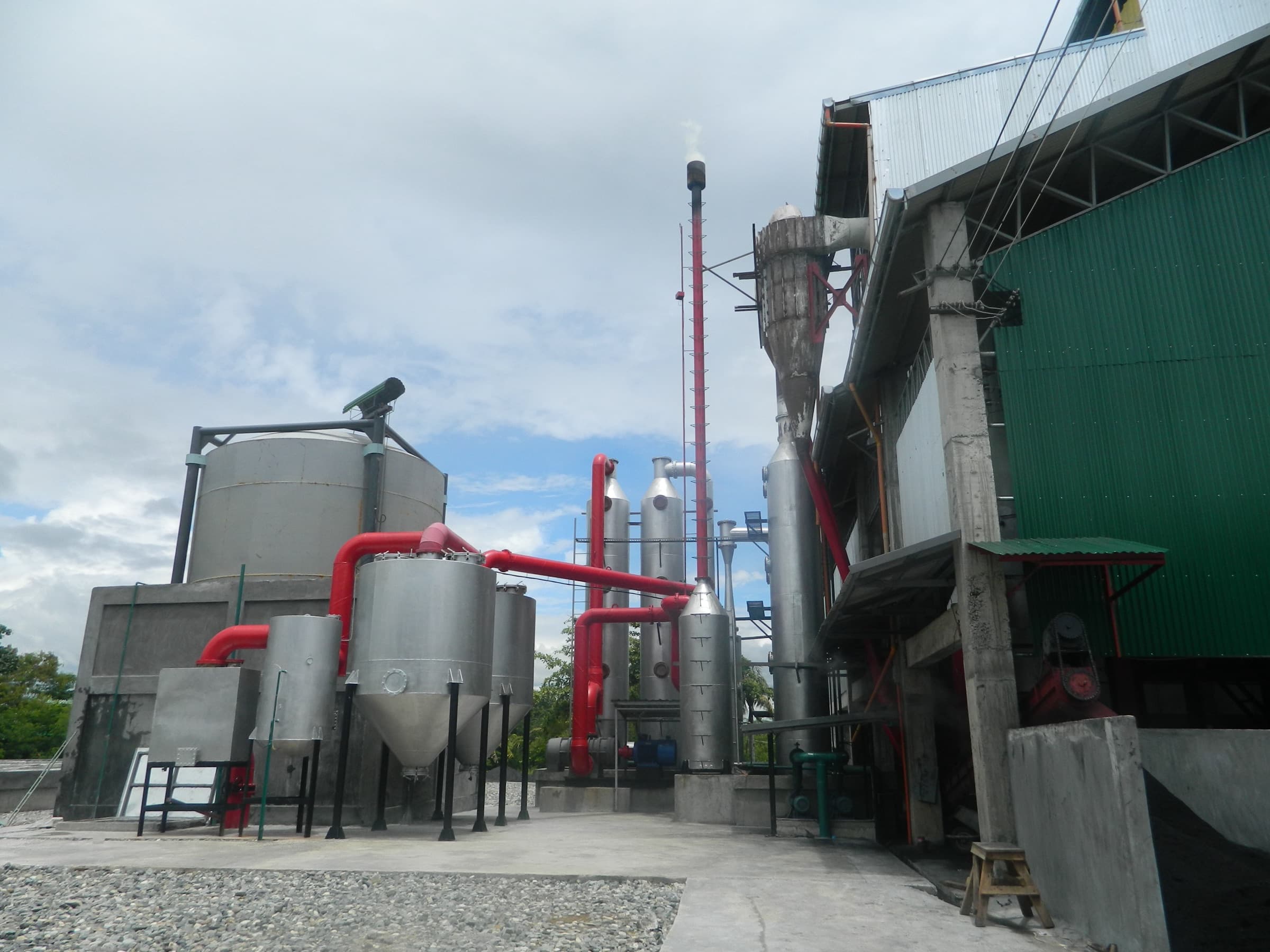
A 1.5 MW onsite plant converts rice husk into electricity at a rice mill in the Philippines. See the Philippines project.
Next step
Assess your mill — share your paddy throughput and husk use, and we will tell you what an onsite plant could supply.
.jpeg&w=3840&q=75&dpl=dpl_8omWQr2dmx9eNa5YGxR721ZE6K6N)