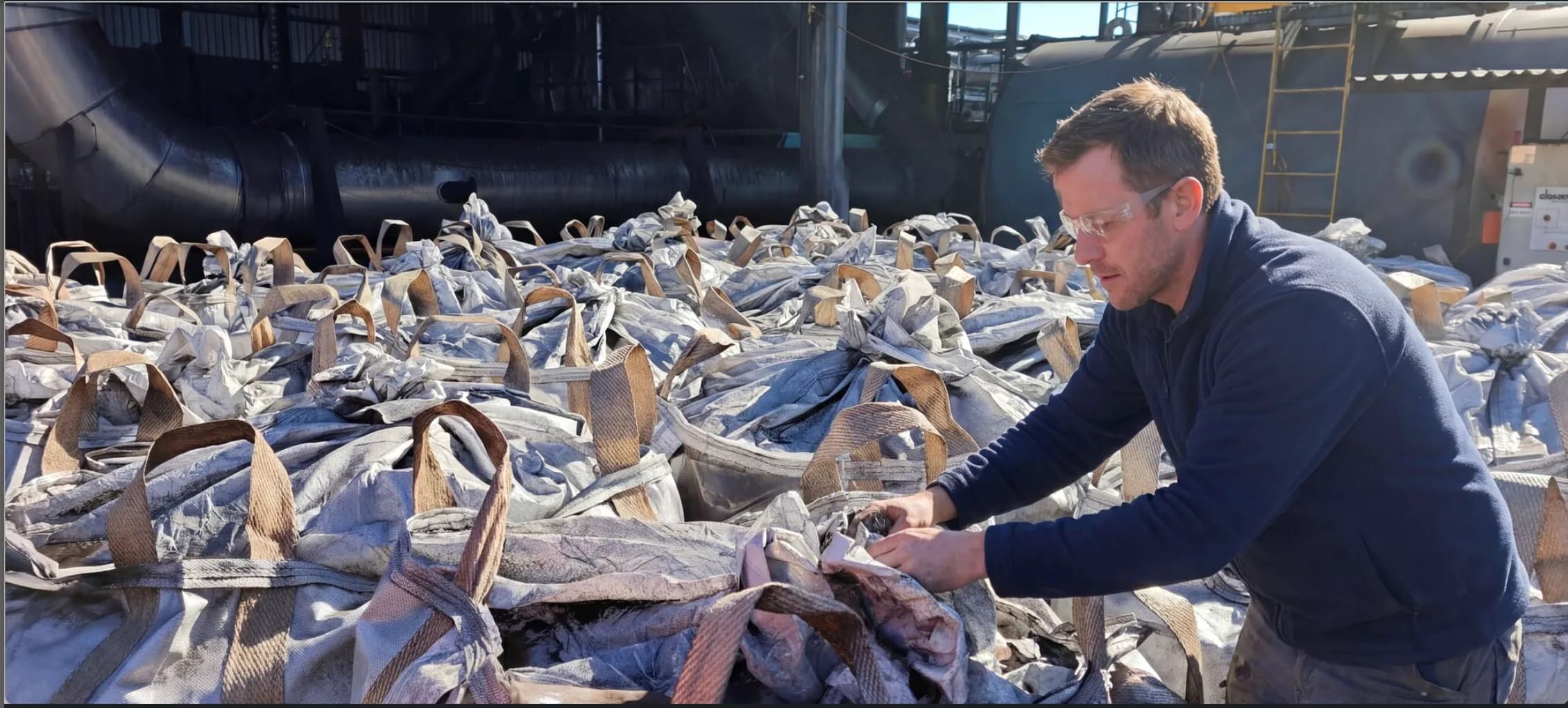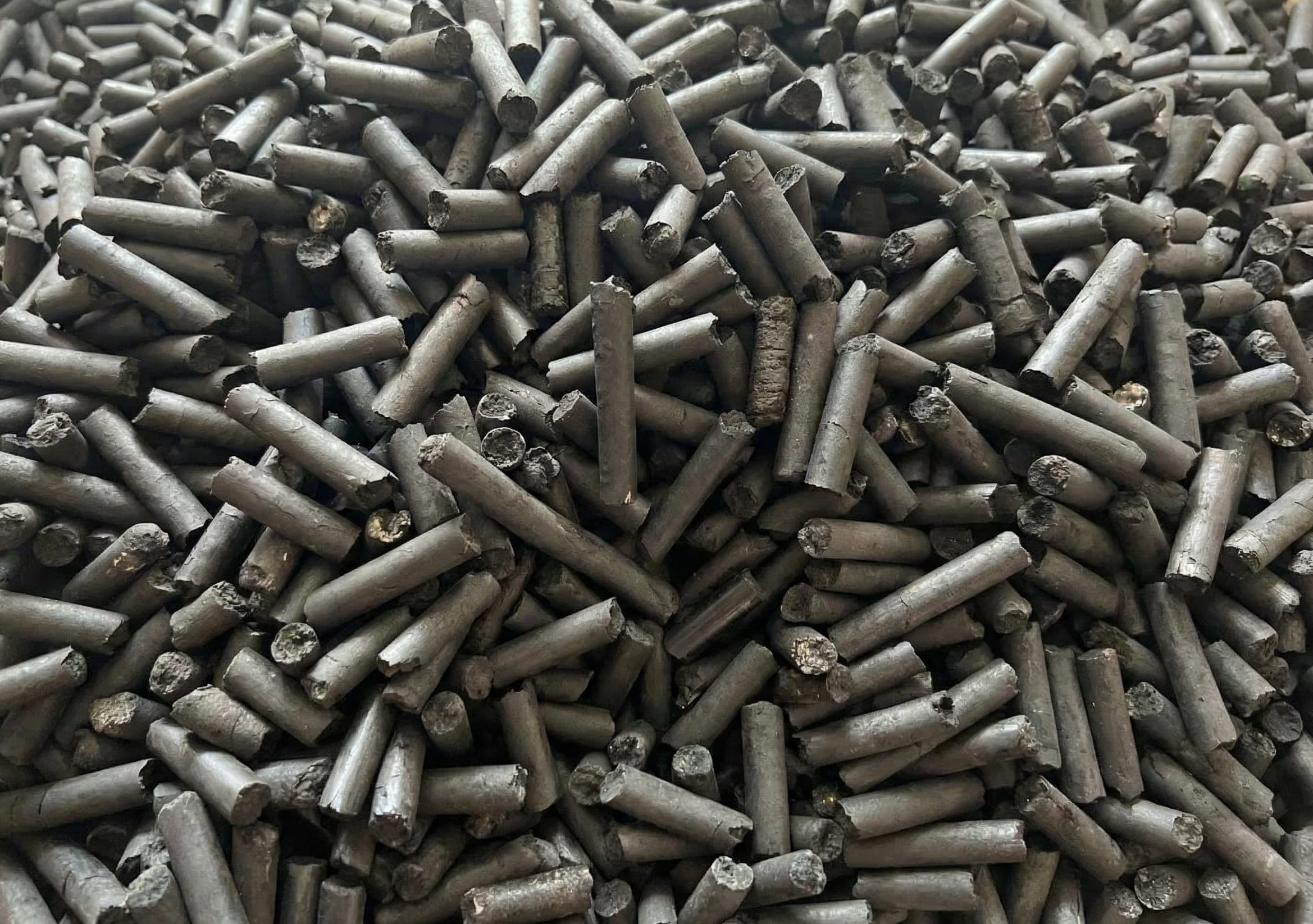
Carbon removal buyers have learned to ask hard questions. After years of controversy over offsets that were difficult to verify, durable removal — carbon taken out of the atmosphere and stored in a stable form — has to be measured, not assumed. Biochar is well suited to that scrutiny because the carbon is a physical product that can be weighed, sampled and analysed.
What is being measured
Plants take carbon dioxide from the air as they grow. When residues decompose or are burned, that carbon returns to the atmosphere. When they are converted to biochar, a large share of it is held in a stable solid form.
The removal for a batch of biochar is calculated from:
- Mass. How much biochar was produced, on a dry basis.
- Carbon content. What share of that mass is organic carbon.
- Stability. How much of that carbon will persist over the long term.
- Deductions. Emissions from growing, collecting, transporting and processing the feedstock, and from applying the biochar.
The result is expressed in tonnes of CO₂ removed.
Measuring stability
Not all carbon in biochar is equally stable. Methodologies assess stability from laboratory indicators, the most widely used being the molar ratio of hydrogen to organic carbon (H/Corg). A lower ratio indicates a more condensed, aromatic carbon structure that resists breakdown. Many standards set a maximum H/Corg — commonly 0.7 — for biochar to qualify, and use the measured ratio in models of how much carbon remains over long timeframes.
Recognised biochar methodologies, including those used by carbon removal registries such as Puro.earth, Verra and Isometric, set out the sampling frequency, laboratory methods and calculations required.
From plant to registry
The chain of evidence for each credit runs:
- Feedstock records. What went in, where it came from, and confirmation that it is an eligible residue.
- Production data. Continuous plant records of fuel input, operating conditions and biochar output.
- Sampling. Representative biochar samples taken on a defined schedule.
- Laboratory analysis. Carbon content, H/Corg, ash and contaminants measured by accredited laboratories.
- End use. Evidence of where the biochar went — soil, concrete, other durable uses — and that it was not burned.
- Life-cycle assessment. Emissions across the chain calculated and deducted.
- Independent verification. A third-party verifier audits the data and calculations.
- Issuance. Credits are issued on a public registry with a unique serial number, and retired when a buyer claims them.
A worked example of the calculation
The arithmetic is simple once the measurements exist. Using round, illustrative numbers:
- A plant produces 1,000 tonnes of biochar (dry basis) in a reporting period.
- Laboratory analysis shows 75% organic carbon, so the biochar holds 750 tonnes of carbon.
- Converting carbon to CO₂ (multiplying by 44/12) gives about 2,750 tonnes of CO₂ contained in the biochar.
- A permanence factor from the methodology — based on the measured H/Corg ratio — is applied to account for the share of carbon expected to persist over the long term.
- Life-cycle emissions from feedstock collection, transport, processing and application are deducted.
The result is the net removal credited for that period. Every input is either measured or taken from the approved methodology, which is what allows a third party to check it.
Why energy plants make good biochar projects
Biochar can be produced in dedicated units that exist only to make char. Producing it inside an energy plant has advantages:
- Continuous operation generates a steady, predictable output that is easy to sample and report.
- Energy is used productively, rather than flared or wasted, which improves the life-cycle balance.
- Plant data systems already record fuel input and operating conditions, which is exactly the evidence verifiers need.
- Two revenue streams — energy and removal — make the project more robust than one alone.
What buyers look for
- Measured, batch-level data rather than project-wide averages;
- Conservative stability assumptions;
- Clear end use that keeps the biochar out of combustion;
- Co-benefits — renewable energy, soil health, waste reduction — documented separately from the removal claim.
How CNP plants handle measurement
CNP plants produce biochar alongside energy. Output is sampled at the plant, analysed by accredited laboratories, verified by a third party and registered on a recognised registry before credits are issued. See Carbon Removal and our white paper on biochar permanence.
Next step
Talk to us about carbon removal — energy projects, biochar offtake and carbon partnerships.