Short answer: Yes, seasonal agricultural residues can power a factory year-round, but annual tonnage alone is not enough. The project needs a month-by-month fuel balance, storage that preserves fuel quality, realistic allowances for losses, and an alternative fuel or operating plan for weak supply periods.
Agricultural processors often produce a large amount of residue in a short harvest window.
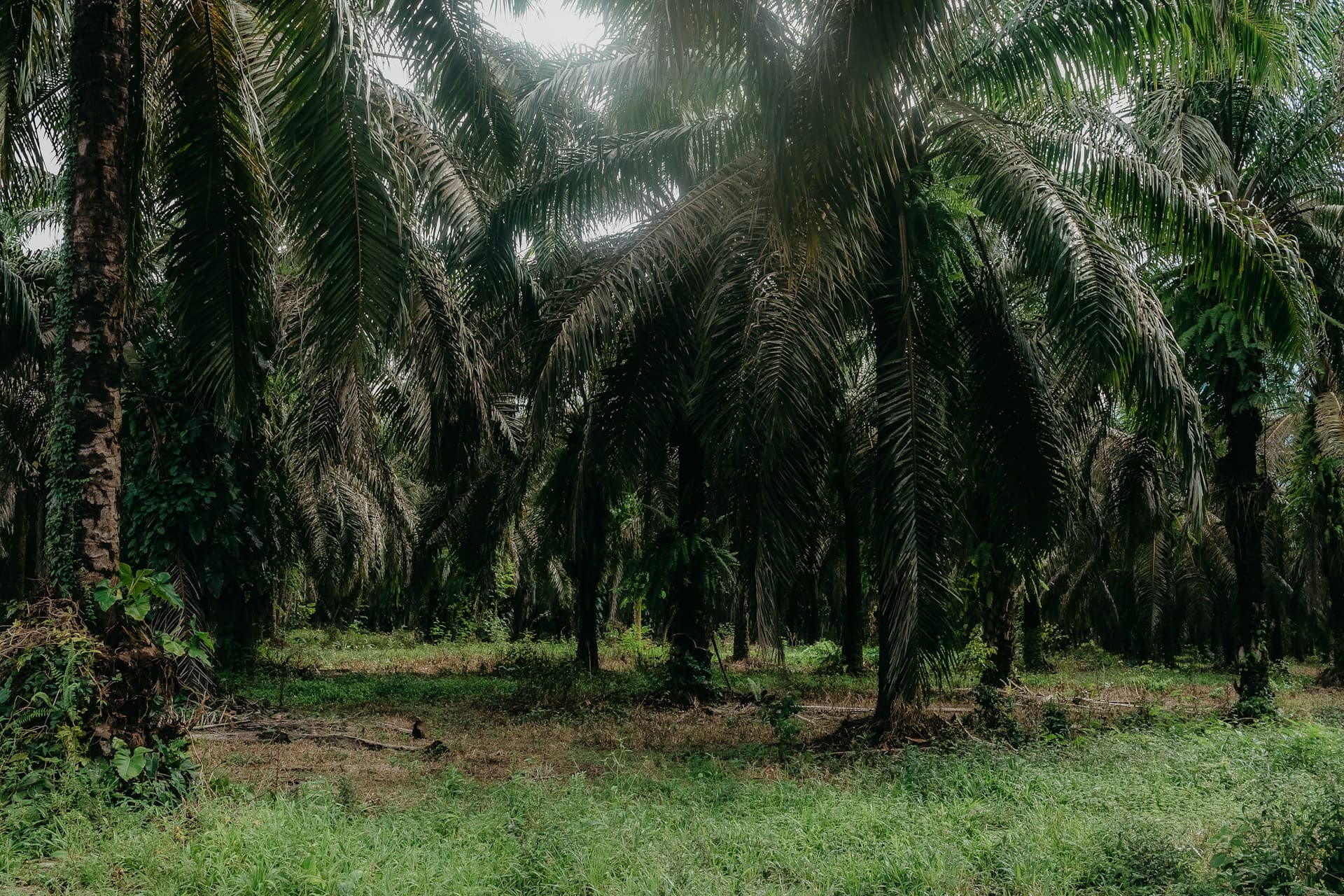
A rice mill may have abundant husk during milling. A sugar mill produces bagasse during crushing. A palm oil mill's residue follows fresh fruit bunch throughput. Maize cobs, nut shells, pruning waste and fruit-processing residues can be equally seasonal.
On an annual spreadsheet, the numbers may look perfect. The factory produces 10,000 tonnes of usable residue and the proposed plant needs 8,000 tonnes.
That does not prove the plant can run throughout the year.
The real question is whether suitable fuel reaches the plant in every operating month, at the required moisture, particle size, ash content and delivery rate.
- Seasonal residueharvest and processing peaks
- Covered storageprotects moisture and quality
- Fuel blendingsecond residue fills the off-season
- Contracted backupthird-party fuel, grid or other fuel
- Steady supplyyear-round power and steam
Start with a monthly fuel balance
The core calculation is simple:
Opening inventory + fuel received − plant consumption − storage and handling losses = closing inventory
Build this calculation for every month, not only for the full year.
The model should show:
- residue produced onsite by month;
- contracted fuel arriving from third parties;
- tonnes consumed by the plant;
- moisture and energy content;
- material rejected during preparation;
- storage and handling losses;
- minimum required inventory;
- closing stock before the next month begins.
A project fails its fuel test if inventory becomes negative in any month, even if the annual total is positive.
The model should also test a poor harvest, delayed crop, wet season and temporary supplier failure. A plant designed around the average year may struggle in the year that matters most to lenders and customers.
Worked example: a four-month harvest
Assume an onsite energy plant consumes biomass at an average of 1 tonne per operating hour and runs for 8,000 hours each year.
Annual fuel consumption is:
1 t/h × 8,000 h = 8,000 tonnes per year
Now assume nearly all residue is collected during a four-month harvest.
If plant demand is reasonably steady, it will consume about 2,667 tonnes during those four months. The other 5,333 tonnes must be carried forward to cover the remaining eight months.
If the project uses a simple 10 percent overall allowance for storage, handling and rejected material, it should plan to secure about:
8,000 t ÷ 90% = 8,889 tonnes of gross fuel
Under an even four-month collection profile, peak inventory could approach 6,200 tonnes before the harvest ends.
This is the number that determines whether year-round operation is physically realistic.
Storage tonnage is not storage volume
Low-density biomass consumes a surprising amount of space.
The FAO identifies bulk density as the measure relevant to transport and storage volume. Its typical figures include about 195 to 260 kg/m³ for loose wood chips, roughly 70 kg/m³ for chopped straw and around 500 to 600 kg/m³ for densified straw or wood pellets.
Using an illustrative bulk density of 250 kg/m³:
6,200 tonnes ÷ 0.25 tonnes/m³ = 24,800 m³ of biomass
At an average usable stack depth of 5 metres, the material alone occupies about:
24,800 m³ ÷ 5 m = 4,960 m²
That is before allowing for:
- fire separation;
- vehicle access;
- drainage;
- retaining walls;
- conveyors and reclaim systems;
- quarantine space for off-specification fuel;
- first-in, first-out inventory movement.
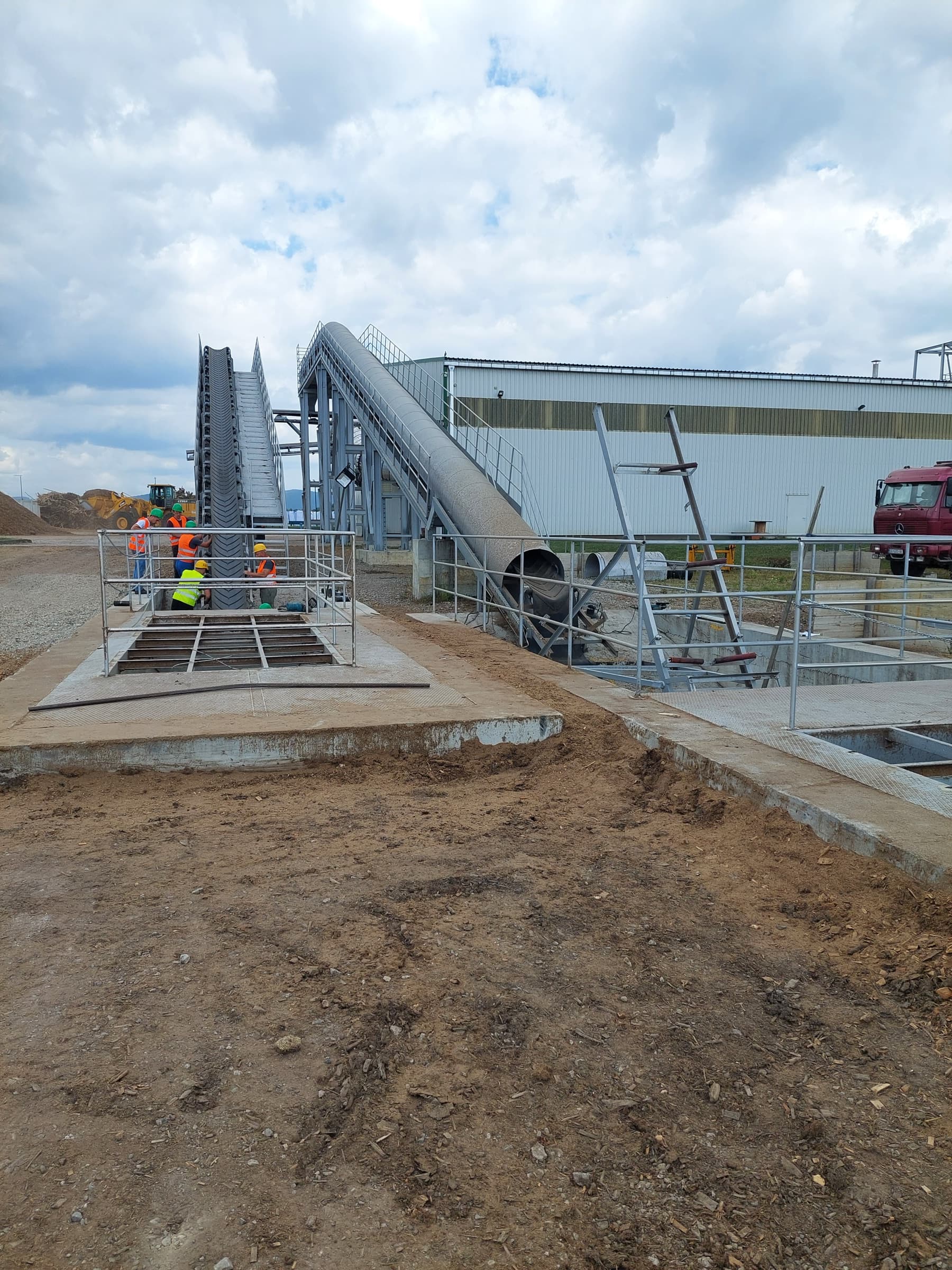
A fuel plan that needs six months of stock may require an industrial storage facility, not a spare corner of the mill.
Storage changes the fuel
Stored biomass is not a static inventory.
IEA Bioenergy reports that storage outcomes depend on biomass type, particle size, compaction, storage duration, temperature, humidity and the storage method. Degradation can reduce dry matter and energy content while increasing project cost and emissions.
The US Department of Energy similarly treats moisture management, degradation, material loss and fire risk as core feedstock-storage issues.
The key risks are:
Moisture gain
Rain, ground contact and humid air can increase moisture. The plant then receives fewer gigajoules per tonne and may struggle to hold rated output.
Biological degradation
Wet organic material can support microbial activity. Dry matter and energy are lost, and the pile can heat internally.
Self-heating and fire
Large piles need a storage design, monitoring regime and emergency plan suited to the specific material. Fire controls cannot be added as an afterthought.
Contamination
Soil, stones, metal and plastic can enter during collection and repeated handling. These materials affect conveyors, reactors, ash and maintenance.
Working capital
Fuel purchased during harvest may sit for months before it earns energy revenue. The project must fund that inventory as well as the storage infrastructure.
Handling losses
Every transfer, screening step and exposed pile can lose material. Contracted tonnes and usable tonnes are not the same number.
The correct loss allowance depends on the feedstock and storage design. It should be supported by trials or operating evidence, not selected only to make the model work.
Five ways to manage a seasonal feedstock
There is no universal answer. The right strategy depends on the factory load, harvest length, available land and local fuel market.
| Strategy | Main advantage | Main limitation | Best fit |
|---|---|---|---|
| Operate only during the processing season | Minimal long-term storage | Plant assets sit idle outside harvest | Highly seasonal factories with matching energy demand |
| Store one primary residue | Simple fuel specification | Large land, capital and degradation exposure | Stable, dry residue with proven storage behaviour |
| Blend two or more residues | Extends the supply calendar and can stabilise quality | Requires testing, contracts and compatible fuel preparation | Regions with complementary crop seasons |
| Use contracted third-party biomass | Reduces onsite storage requirement | Adds price, supplier and transport risk | Sites near a credible regional fuel market |
| Hybrid plant or backup fuel | Protects energy supply during shortages | More equipment and potentially higher emissions or fuel cost | Factories where loss of power or steam is unacceptable |
In practice, strong projects often combine several approaches. They may keep 30 to 60 days of covered primary fuel, blend a second residue during the off-season and retain the grid or another fuel for contingencies.
Blending can be better than building a bigger shed
A second feedstock can reduce both peak inventory and storage duration.
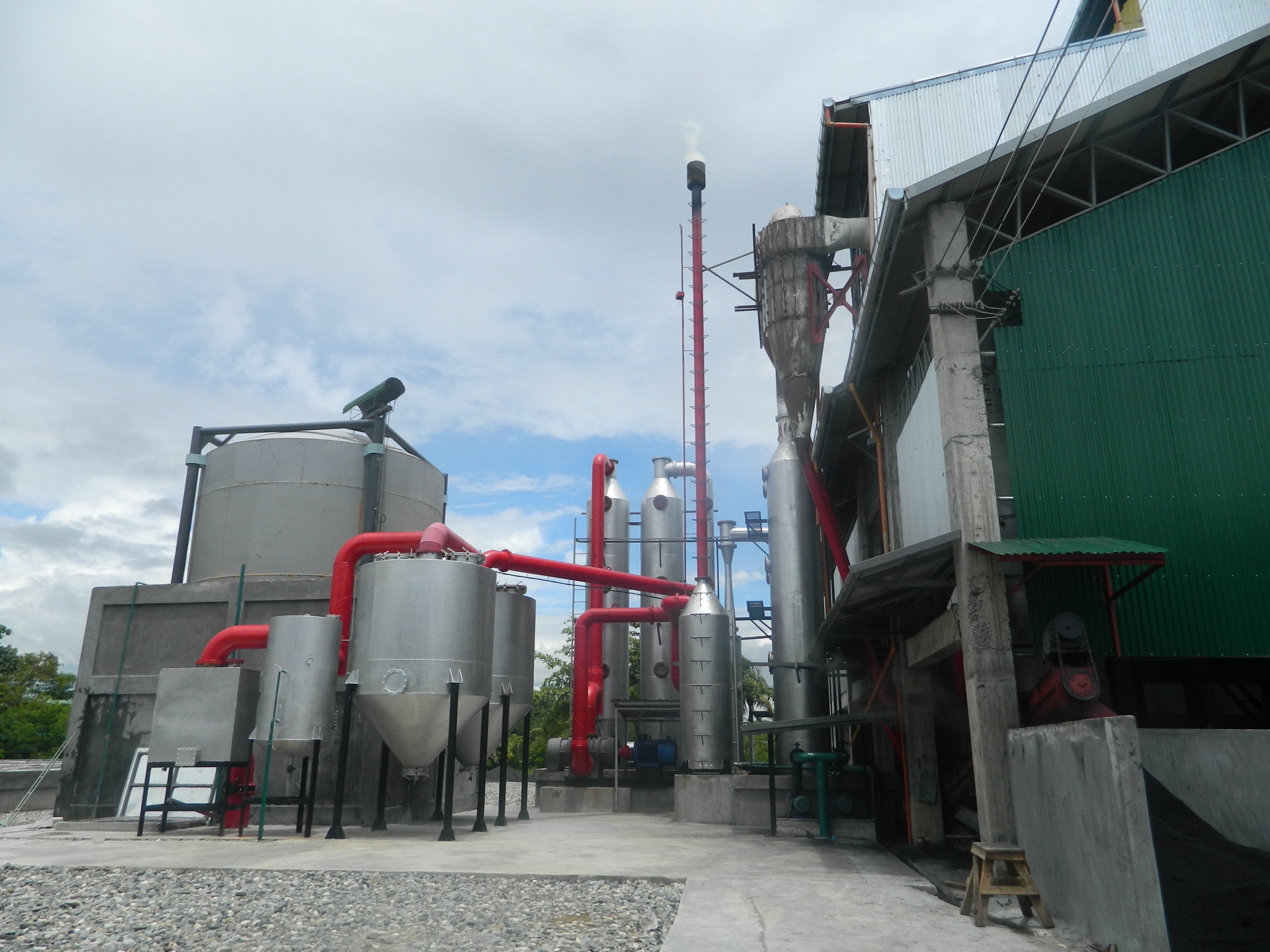
For example, a rice-processing region may have husk during one milling season and wood-processing residue throughout the year. A palm oil project may combine palm kernel shell, fibre and contracted wood residue. A sugar project may use bagasse during crushing and a dry external fuel outside the season.
Blending only works if the plant is designed for the combined fuel envelope.
Check each fuel for:
- moisture;
- lower heating value;
- ash content;
- ash chemistry and melting behaviour;
- chlorine and alkali content;
- particle size;
- bulk density;
- contamination;
- feeding and conveying behaviour.
A 50:50 blend by mass is not necessarily a 50:50 blend by energy. A tonne of wet low-density residue does not replace a tonne of dry shell or wood chip.
The blending plan should therefore be based on energy and equipment limits, with mass flow used to size logistics.
Size the plant to dependable fuel, not the best month
A large harvest month can tempt developers to build the largest possible plant.
That is often the wrong decision.
Plant size should be tested against:
- the weakest credible month;
- the storage capacity the site can actually build;
- the amount of alternative fuel that can be contracted;
- the factory's minimum and peak energy loads;
- the cost of unused fuel and unused plant capacity;
- the consequences of fuel shortage.
A smaller plant running reliably can produce more annual energy than a larger plant that regularly reduces output or stops.
This is particularly important for financed projects. A lender will care more about dependable operating cash flow than the theoretical maximum output during harvest. See what makes an onsite biomass project bankable.
Do not assume all residue is available
Gross residue production is not the same as usable fuel supply.
Some material may already be:
- used for process heat;
- sold to another buyer;
- returned to the soil;
- used as animal bedding or feed;
- too wet or contaminated;
- dispersed across many small suppliers;
- unavailable under enforceable contracts.
Sustainability can also require leaving some agricultural residue in the field to protect soil carbon, nutrients and erosion control. The appropriate removal rate is crop and site specific.
A credible feedstock assessment starts with net recoverable residue after existing uses, sustainability limits and collection losses.
What makes the supply plan bankable?
A year-round fuel plan becomes credible when evidence replaces assumptions.
The project should have:
- at least twelve months of residue-production data, preferably several seasons;
- monthly volumes rather than one annual estimate;
- representative laboratory testing across wet and dry periods;
- a storage concept with land area, capacity, drainage, fire controls and reclaim method;
- explicit storage and handling loss assumptions;
- signed or financeable supply arrangements for third-party fuel;
- a tested blending range;
- minimum-inventory triggers and reorder rules;
- a contingency plan for poor harvests and supplier failure;
- a plant size aligned with dependable fuel and customer demand.
The United States Department of Agriculture and Department of Energy describe storage as a critical supply-system element where seasonal biomass supports year-round facilities. They also identify preprocessing, regional depots and feedstock blending as ways to manage variability and reduce logistics problems.
The practical answer
Seasonal residue can support year-round onsite power or steam. The project must bridge the time between harvest and consumption without losing control of fuel quantity, quality or cost.
Use the annual total for an initial screen. Use the monthly fuel balance to decide whether the project is real.
For many sites, the best answer will not be twelve months of storage. It will be a combination of right-sized generation, covered inventory, complementary feedstocks and a backup energy source.
CNP develops, finances, builds and operates onsite energy systems for agricultural processors and industry. If your facility has seasonal residue, send CNP your monthly production, energy and fuel data for an initial assessment.