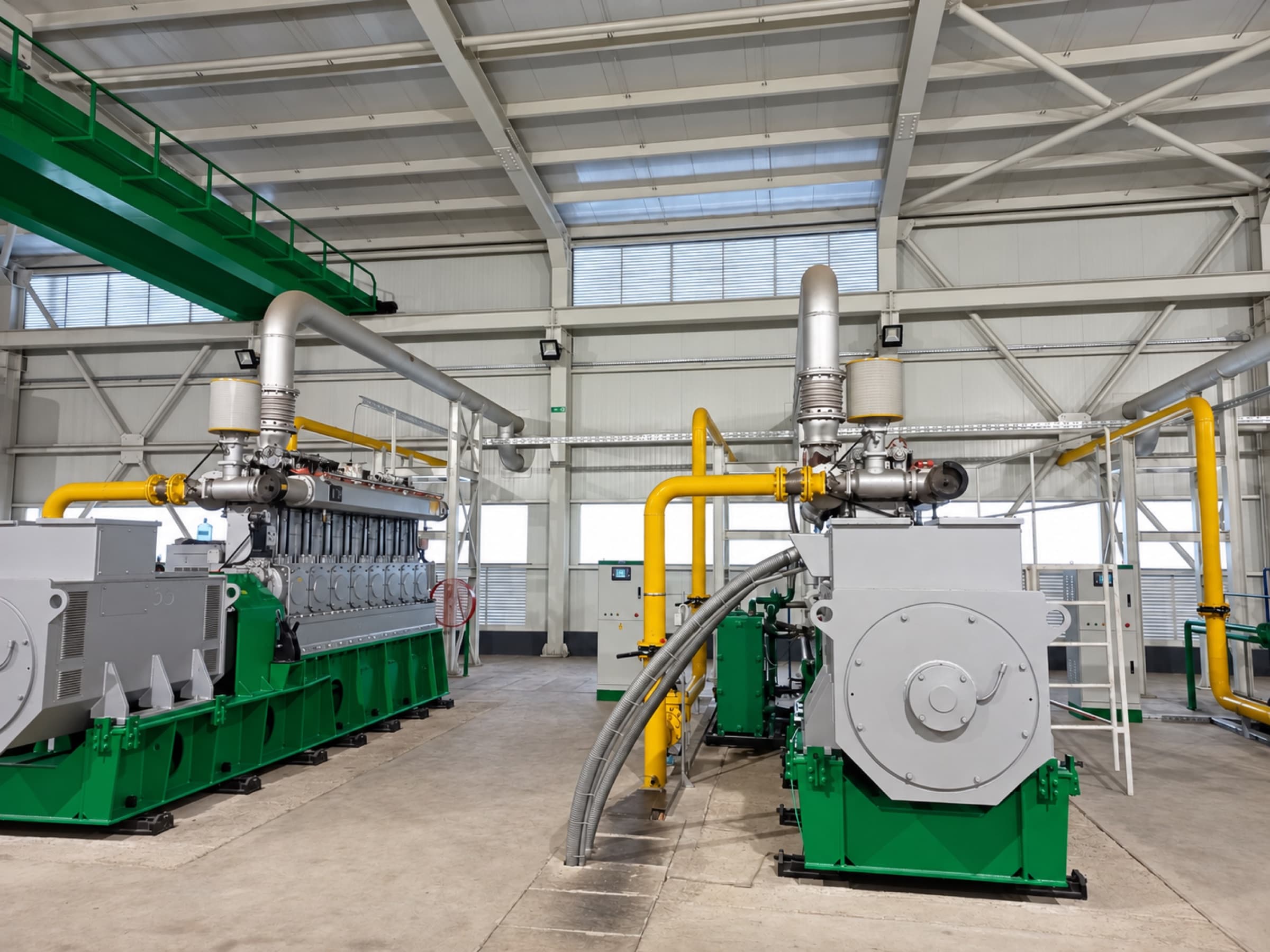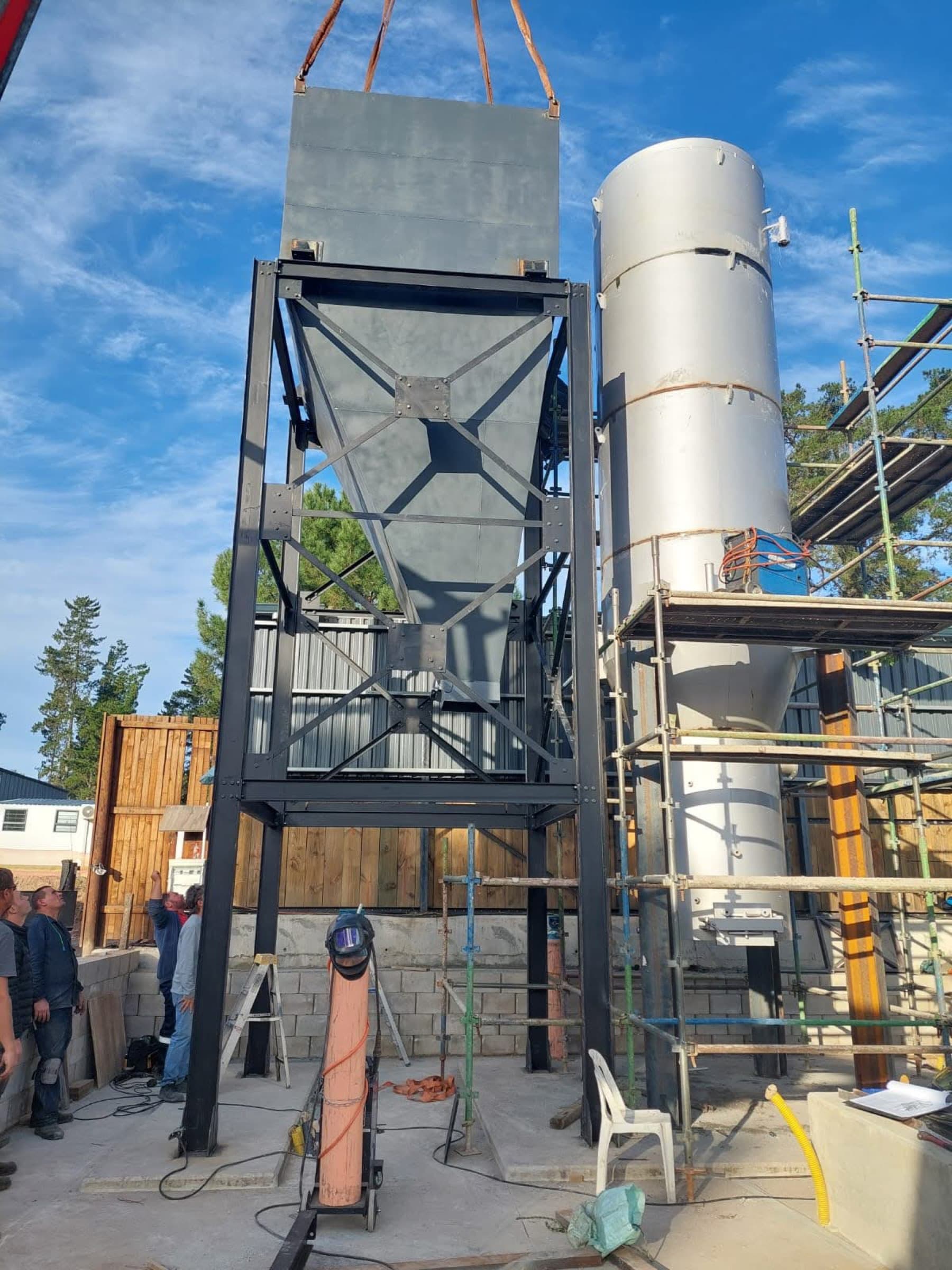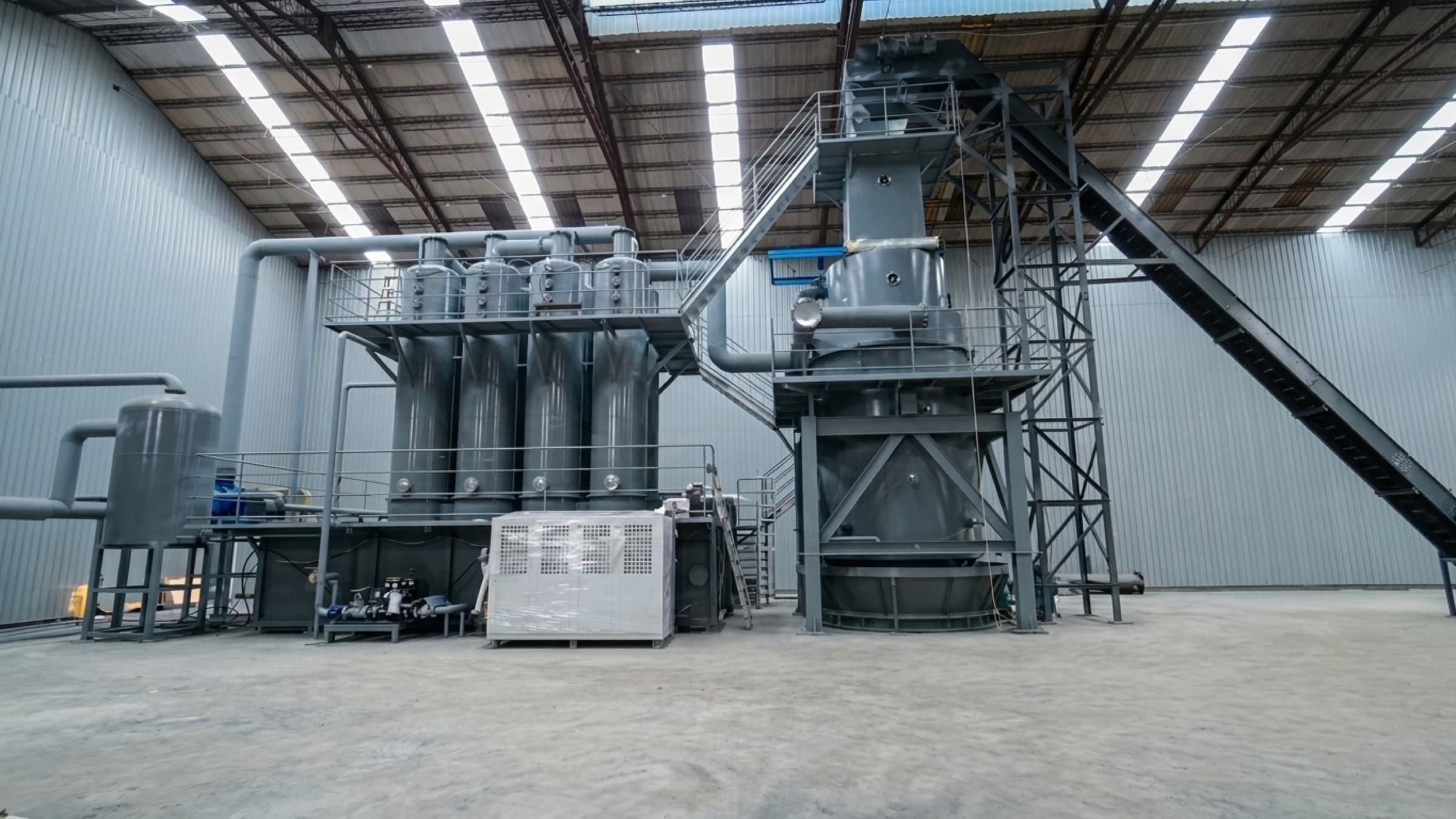
Short answer: Biomass combined heat and power, or biomass CHP, uses one fuel to produce electricity and useful heat at the same site. When a factory can use both outputs, total fuel-use efficiency commonly reaches about 65 to 80 percent. The best projects have steady electrical demand and a matching need for steam, hot water, hot air or cooling.
Most power generation creates heat. The commercial question is whether that heat is useful or wasted.
At a conventional power station, much of it is rejected to the environment. In a combined heat and power plant, the heat is recovered and delivered to the customer. That can turn the same tonne of biomass into two saleable energy products.
For agricultural processors and factories, this is often where the strongest project economics are found. The plant can replace grid electricity and boiler fuel at the same time.
- Biomass fuelResidues delivered to site
- Gasification or combustionOne conversion step
- ElectricityMotors, lines and site load
- Recovered heatExhaust, jacket water and more
- Steam, drying, hot water or coolingMatched to the process
What is biomass CHP?
Combined heat and power, also called cogeneration, is the simultaneous production of electricity and useful thermal energy from a single fuel source.
The biomass can be converted through several pathways:
- gasification, with cleaned syngas feeding an engine;
- combustion, with a boiler producing steam for a turbine;
- direct production of process gas or heat with power recovery where appropriate.
The useful thermal output may be:
- steam for processing;
- hot air for dryers;
- hot water for washing or heating;
- thermal oil for industrial equipment;
- chilled water produced through an absorption chiller.
The word useful matters. Heat that leaves an engine or condenser has no commercial value unless the customer can use it at the required temperature, pressure, volume and operating hours.
Why CHP can be more efficient
The US Environmental Protection Agency reports that CHP systems commonly achieve total efficiencies of 65 to 80 percent, with some systems approaching 90 percent. The US Department of Energy describes a typical CHP range of about 65 to 75 percent.
Those figures combine electricity and useful heat. They should not be confused with electrical efficiency alone.
A simplified example shows the logic:
| Energy flow from 100 units of biomass fuel | Illustrative output |
|---|---|
| Net electricity | 25 units |
| Useful recovered heat | 45 units |
| Losses and plant consumption | 30 units |
| Total useful efficiency | 70 percent |
This is an illustration, not a CNP performance guarantee. The actual split depends on the technology, fuel, scale and temperature required by the process.
A power-only plant might still generate the same 25 units of electricity but reject most of the remaining heat. CHP earns value from energy that would otherwise be lost.
Where biomass CHP fits best
The strongest candidates usually have four characteristics.
1. Continuous power demand
CHP performs best when the site consumes electricity for long hours. Mills, cold stores, mines and continuously operated factories can use the output behind the meter rather than exporting it at a lower or uncertain price.
2. A stable heat load
The site needs steam, hot water or hot air at the same time the plant generates electricity.
Good examples include:
- veneer and timber drying;
- rice and grain drying;
- palm-oil sterilisation;
- food cooking, washing and pasteurisation;
- paper and pulp processing;
- industrial laundries;
- cold storage with absorption cooling;
- process steam for chemicals and manufacturing.
3. A dependable biomass supply
The plant requires enough fuel of the right quality every operating hour. A large annual residue estimate is not enough. Moisture, ash, particle size, monthly volume, storage and competing uses all affect the design.
4. A useful temperature match
Low-temperature engine heat cannot automatically replace high-pressure steam. Each heat source needs to be matched to a process sink.
An engine-based system may provide several grades of recoverable heat from exhaust gas, jacket water and lubricating oil. Exhaust can often support steam or high-temperature drying, while jacket-water heat may suit hot water or lower-temperature processes.
Electricity-led or heat-led sizing?
A common mistake is to select a generator size first and then look for somewhere to send the heat.
Instead, map both load profiles across the day, week and year.
| Question | Why it matters |
|---|---|
| What is the site's minimum electrical load? | Limits how much power can be consumed continuously behind the meter. |
| How much heat is needed at each temperature and pressure? | Determines how much recovered heat is genuinely useful. |
| Do power and heat demand occur at the same time? | CHP value falls if one output has no customer. |
| How seasonal is production? | Changes annual utilisation and fuel storage needs. |
| Can excess power be exported? | Affects the operating strategy, permits and economics. |
| Can excess heat be stored or redirected? | May improve utilisation, but adds equipment and cost. |
The final design may be electricity-led, heat-led or constrained by fuel. What matters is that the model uses the lower of the real, simultaneous demands rather than adding annual totals that never occur together.
A worked screening example
Consider a mill with:
- 1.5 MW average electrical demand;
- 2 MWth of drying heat;
- 7,500 operating hours per year;
- biomass residue available on site.
A proposed CHP plant might export 1 MW of electricity and deliver 1.5 MWth of useful heat at full load.
At 7,500 hours, that is:
- 7,500 MWh of electricity;
- 11,250 MWhth of useful heat.
The commercial model should value the electricity against avoided grid purchases and the heat against the fuel and operating cost of the existing dryer or boiler.
It should not assign value to heat the mill cannot use. Nor should it assume the plant runs for 7,500 hours unless fuel supply, maintenance and the mill's production schedule support that utilisation.
CHP changes the economics of onsite power
A power-only calculation asks whether onsite electricity is cheaper than the grid.
A CHP calculation asks a broader question:
Is onsite electricity plus useful heat cheaper and more reliable than buying grid power and producing heat separately?
The value stack can include:
- avoided grid electricity;
- avoided gas, LPG, oil or coal;
- reduced network exposure;
- use of a residue that otherwise costs money to handle;
- improved energy resilience;
- biochar and verified carbon removal where the configuration qualifies.
This is why a CHP project can work even when electricity alone appears marginal. Heat is not a free bonus, but it can be a major part of the savings if the site genuinely needs it. For more on the power side, see our onsite power solution and the guide to onsite power for agricultural processors.
What buyers should request from a supplier
Ask for a heat balance as well as an electrical single-line diagram.
The proposal should state:
- Gross and net electrical output.
- Heat available from each source.
- Temperature, pressure and flow at the delivery point.
- Expected heat-recovery efficiency.
- Minimum stable operating load.
- Performance across fuel and ambient-condition ranges.
- Planned and unplanned availability assumptions.
- Backup arrangements during maintenance.
- Interface scope for steam, hot water, hot air or cooling.
- Metering used for billing and performance testing.
If the heat numbers appear as a single large total with no temperature or delivery condition, the design is not yet ready for an investment decision.
The practical test
Biomass CHP is a strong fit when the site can answer yes to three questions:
- Do we consume power for long hours?
- Do we need heat at the same time?
- Do we control enough suitable biomass fuel?
If one answer is no, the project may still work, but it needs a different configuration or commercial model. Agricultural processors can start with our agricultural processing page, and manufacturers with industrial manufacturing.
CNP develops, finances, builds and operates onsite plants that supply power and useful heat under long-term energy agreements. Talk to us about your site's power, heat and biomass profile.