For most of the twentieth century, electricity followed a simple logic: build the biggest plant you can, as far away as you need to, and move power over a network. Scale drove down the cost per unit, and the grid did the rest.
That logic still holds for bulk supply. But for a growing number of industrial users, it is no longer the fastest or cheapest way to get firm power where they need it. The alternative is modular generation: standard power blocks, built in a factory, installed at the site and added as demand grows.
What "modular" actually means
A modular power plant is assembled from repeatable units rather than engineered from scratch for each site. In practice that means:
- Standard designs. Each module — fuel handling, conversion, power generation, heat recovery — is a known design with known performance.
- Factory fabrication. Modules are built and tested in a workshop, then shipped as skids or containers.
- Short site works. Civil works are limited to pads, foundations and connections. Most of the complexity is already built.
- Scalable capacity. Plant output is increased by adding blocks, not by redesigning the plant.
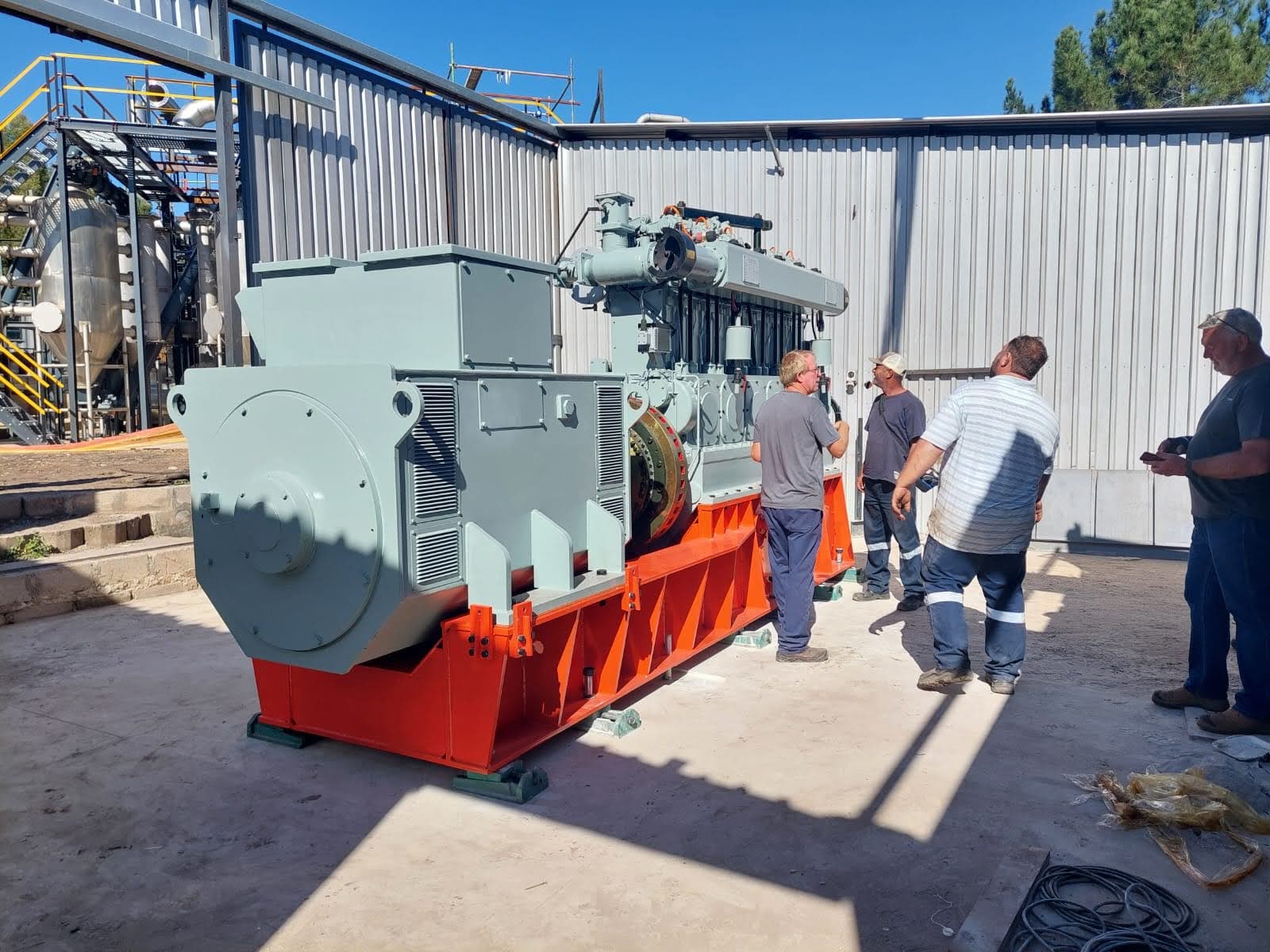
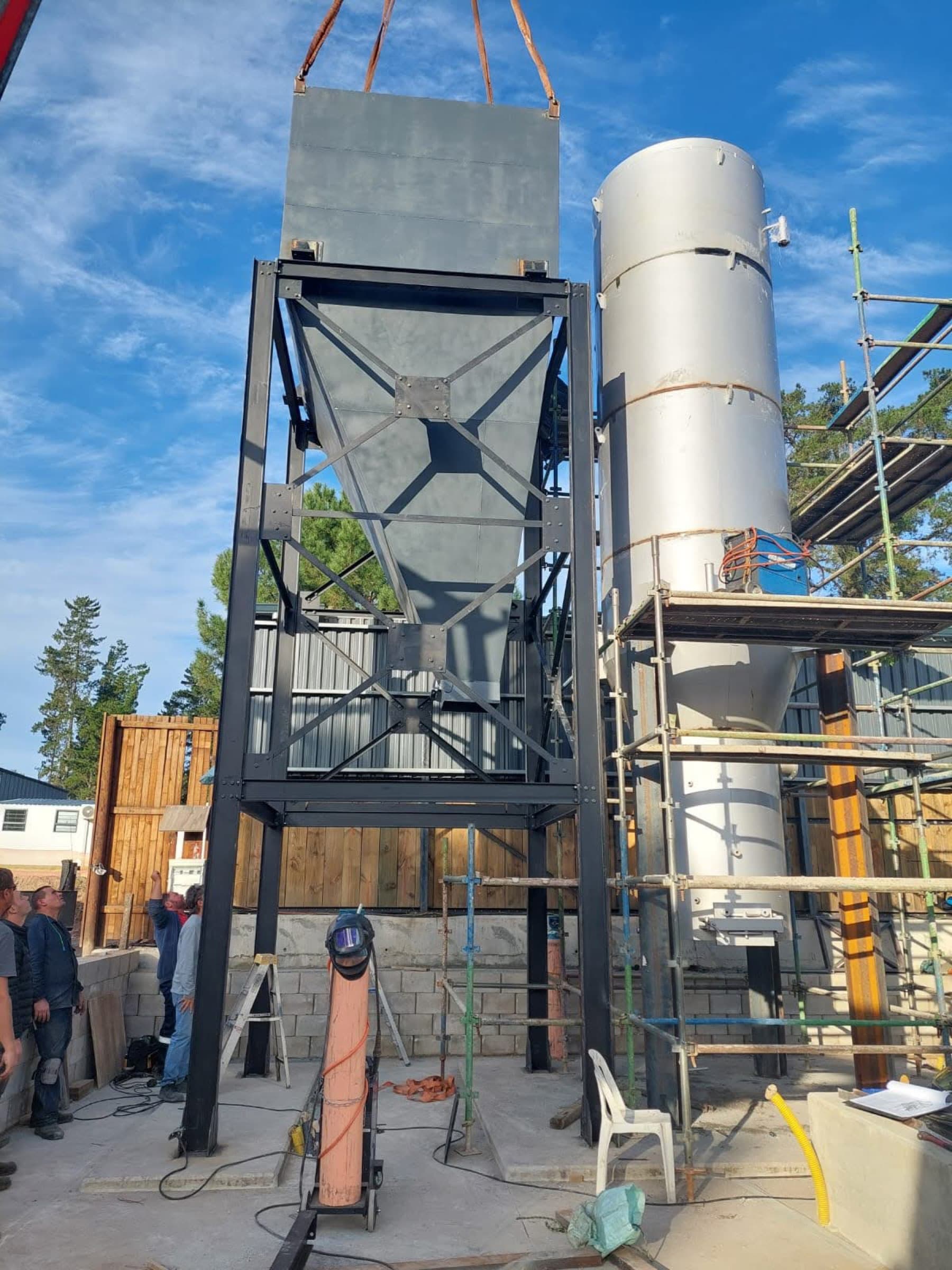
The photograph at the top of this article shows plant modules in fabrication before shipment to site.
Why industrial sites are choosing modular
Faster to power
Because most of the plant is built in parallel with site preparation, modular projects can go from contract to operation faster than a one-off plant of the same size. More importantly for many sites, they avoid the wait for network upgrades.
Lower construction risk
Construction risk concentrates in site works: weather, labour, interfaces and rework. Moving work into a controlled factory environment reduces that exposure and makes outcomes more predictable — which matters to lenders as much as to customers.
Capacity that follows demand
Industrial load rarely arrives all at once. A mill adds a production line; a data centre fills its halls; a mine extends its pit. With modular generation, capacity is added when the load is, instead of being built — and paid for — years ahead.
Built-in redundancy
A plant made of several blocks can keep running while one block is maintained. For a 24/7 operation that is a significant advantage over a single large unit, where any maintenance means a full outage or a backup supply.
Repeatable performance
Standard designs accumulate operating experience. Every module in service teaches the next one, and spare parts, training and procedures carry across sites.
What gets standardised — and what doesn't
Modular does not mean identical at every site. The split is typically:
| Standardised (factory) | Site-specific (engineered per project) |
|---|---|
| Gasification and gas cleaning modules | Plant layout and footprint |
| Engine-generator sets and controls | Fuel reception and storage |
| Heat recovery units | Electrical interconnection and protection settings |
| Control and monitoring systems | Heat integration with the host process |
| Safety systems | Civil works, foundations and drainage |
Standardising the complex process equipment is where most of the schedule and risk benefit comes from. The site-specific scope is smaller and more conventional.
Relocation and redeployment
Because modules are designed to be shipped, they can also be moved. That matters for sites with finite lives — mines, temporary processing operations — and for customers whose load changes. A module no longer needed at one site can be redeployed to another, which reduces the risk of a stranded asset for both customer and supplier.
Where a single central plant still makes sense
Modular is not always the answer. Very large, stable loads close to a strong grid — heavy industry clusters, for example — can still be served most cheaply by utility-scale generation. The economics of modular generation are strongest where:
- the grid connection is slow, expensive or unreliable;
- load is between roughly 1 and 20 MW and may grow;
- there is a local fuel source, such as agricultural or forestry residues;
- the site also needs heat, which a local plant can supply and a remote one cannot.
Modular and local fuel
Modularity pairs naturally with local fuel. A plant sized to the site can be sized to the site's own residues — rice husk, palm fibre and shells, wood offcuts, bagasse — rather than depending on fuel shipped in. The result is a supply that is local in both generation and fuel.
How CNP builds modular plants
CNP plants are built from factory-fabricated modules that convert local biomass into continuous power, heat and — where required — renewable gas. Modules are combined to match each site's load and fuel supply, integrated behind the meter, off-grid, or alongside solar and batteries. See how the technology works.
Most customers buy the energy rather than the plant: CNP finances, builds, owns and operates the modules under a long-term agreement.
Next step
If your site needs 1–20 MW of firm power and heat, assess your site to see how a modular plant would be configured.