High-temperature industrial heat — kilns, furnaces, calciners, dryers — is among the hardest energy uses to decarbonise. Electric alternatives exist for some processes, but for many they are expensive, immature or require grid capacity the site does not have. Two gaseous fuels are most often proposed instead: green hydrogen and renewable gas made from biomass.
Both have a role. For most industrial sites looking to act in the next few years, the practical differences are significant.
What each one is
Green hydrogen is hydrogen produced by splitting water with electricity from renewable sources, using electrolysers. Burned, it produces water vapour rather than CO₂.
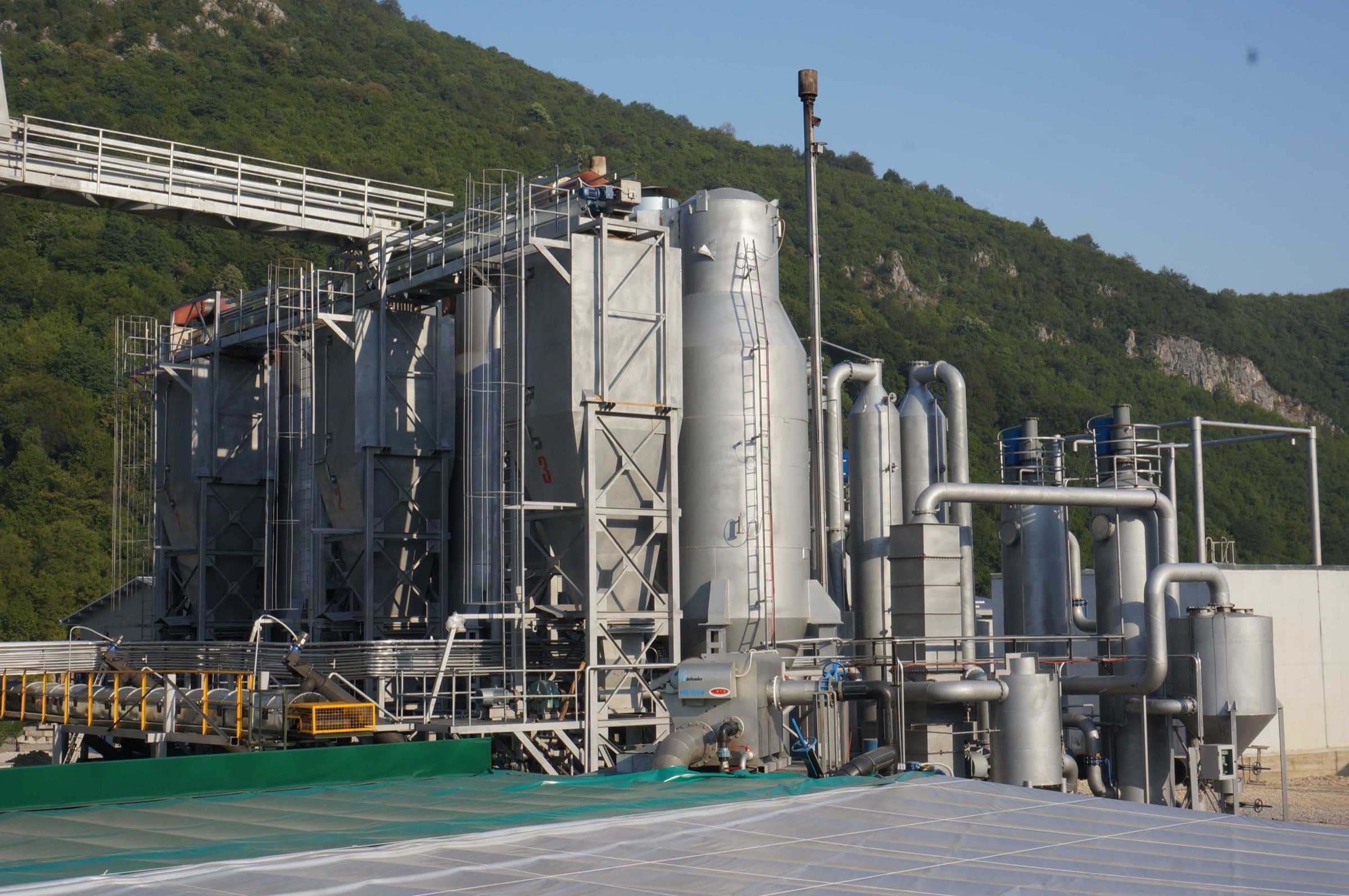
Renewable gas from biomass is produced by gasifying wood and agricultural or forestry residues. It can be used as a cleaned fuel gas for heat and steam, or upgraded to synthetic natural gas (mostly methane) that meets pipeline specifications. See biomass to synthetic natural gas.
Side by side
| Green hydrogen | Renewable gas from biomass | |
|---|---|---|
| Primary input | Large amounts of renewable electricity and water | Local biomass residues |
| Where it is made | Electrolyser plant, often remote from the user | At or near the site using it |
| Transport and storage | New pipelines or compression/liquefaction; low energy density by volume | Short pipe to the burner, or existing gas network if upgraded to SNG |
| Burner and equipment changes | Often significant — flame properties and materials differ | Usually modest — burner adjustment or change; SNG is like-for-like with natural gas |
| By-products | Oxygen | Biochar, which can provide verified carbon removal |
| Maturity at industrial scale | Scaling up; costs falling but still high in most markets | Established process steps; availability depends on local fuel |
When hydrogen makes sense
Green hydrogen is compelling where:
- very cheap renewable electricity is abundant;
- the process specifically needs hydrogen as a chemical feedstock (ammonia, refining, some steelmaking);
- hydrogen infrastructure is already being built nearby.
When renewable gas makes sense
Renewable gas from biomass is compelling where:
- there is a reliable local supply of wood or agricultural residues — often the site's own;
- the site needs heat now and cannot wait for hydrogen supply chains;
- keeping existing burners and equipment matters;
- the site also wants power, heat recovery and carbon removal from the same plant.
They are not mutually exclusive
Over time, many industrial regions will use a mix of electrification, hydrogen and renewable gas, each where it fits best. The question for an individual site is simpler: what can decarbonise our heat, reliably and affordably, on a timeline that meets our commitments? For sites with biomass nearby, renewable gas often answers that first.
How CNP delivers renewable gas
CNP builds, owns and operates plants that convert local biomass into renewable gas for heat and steam, or upgrade it to pipeline-quality synthetic natural gas for the local grid. See Renewable Gas.
Next step
Assess your site — tell us your heat demand and current fuel, and we will tell you whether renewable gas fits.