Most renewable energy arrives as electricity. But a large share of the energy industry and households actually use arrives as gas — for heat, steam, cooking and industrial processes — and the pipes, burners and boilers that use it are built to last decades.
Synthetic natural gas made from biomass offers a way to decarbonise that supply without replacing the infrastructure. It is methane, like fossil natural gas, but made from renewable carbon.
What synthetic natural gas is
Synthetic natural gas (SNG) — also called bio-SNG or renewable methane — is a gas produced from biomass and upgraded until it meets the same specification as the natural gas in a transmission or distribution network. That specification covers methane content, heating value, Wobbe index, and limits on hydrogen, carbon dioxide, sulphur, water and other components.
Meeting the specification is what makes SNG useful: it can be injected into the local gas grid and used by any customer on that network, with no changes to their equipment.
SNG from gasification is different from biogas made by anaerobic digestion. Digestion suits wet feedstocks such as manure and food waste. Gasification suits dry, woody biomass — forestry residues, sawmill offcuts, wood chip and many agricultural residues — which digestion cannot break down efficiently.
The pathway, step by step
1. Fuel preparation
Wood and residues are sized and dried to a consistent specification. Consistent fuel means consistent gas.
2. Gasification
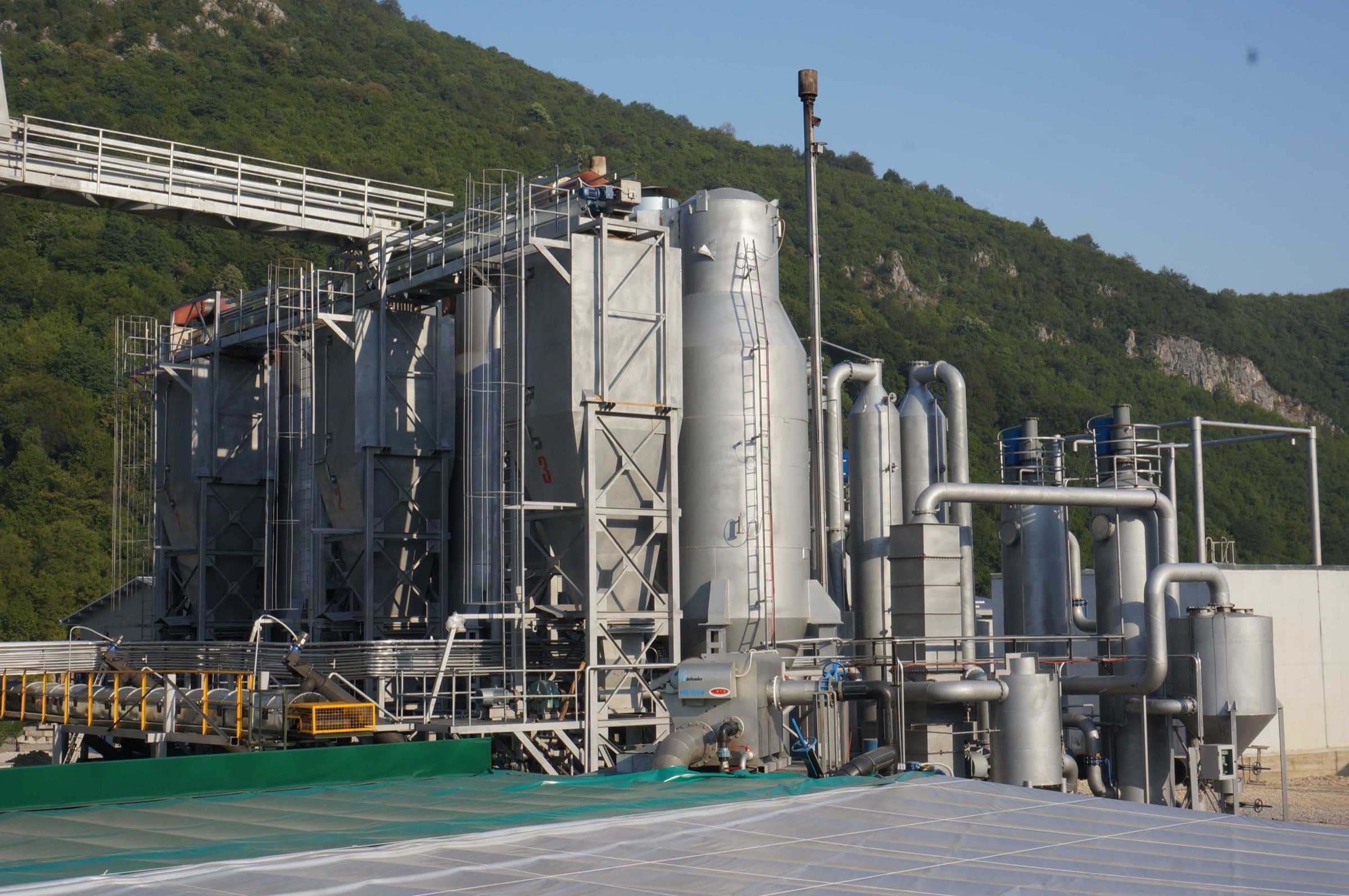
The biomass is heated with a controlled, limited supply of oxidant so that it breaks down into a gas rather than burning completely. The raw product — syngas — is mainly hydrogen, carbon monoxide, carbon dioxide and some methane, with tars and particulates that must be removed. Part of the carbon can be left behind as biochar.
3. Gas cleaning
Tars, particulates, sulphur compounds and other contaminants are removed. This protects the catalysts downstream and is critical to reliability.
4. Methanation
Over a catalyst, hydrogen and carbon monoxide react to form methane and water. The chemistry is well established — methanation has been used in industrial gas processing for decades.
5. Upgrading and conditioning
Carbon dioxide and water are removed and the gas is brought to network specification: methane content, heating value and pressure. The gas is metered and odorised as required by the network operator.
6. Injection
The finished gas is compressed to network pressure and injected at a connection point, where it blends with the gas already in the pipes.
Two routes from one plant
Not every project needs to go all the way to pipeline quality. The same gasification plant can serve two kinds of customer:
- Heat and steam. Cleaned renewable gas can be fired directly in kilns, dryers and boilers on or near the plant site, replacing LPG, oil or coal. This is simpler and suits industrial sites with large heat demand.
- Pipeline gas. Where there is a gas network nearby and demand for renewable supply, the gas is upgraded to SNG and injected.
Who buys the gas
A synthetic natural gas project needs an offtaker, and there are several possible structures:
- Gas utilities and network operators seeking renewable supply to meet blending targets or customer demand.
- Industrial and commercial gas users on the network who contract for renewable gas and claim it through certificates or registry systems, even though the physical molecules are blended.
- Transport fleets using compressed or liquefied gas, where renewable gas can qualify for fuel incentive schemes in some markets.
- Nearby industrial sites taking gas directly by pipeline rather than through the network.
Long-term offtake contracts, like power purchase agreements, give the project the revenue certainty it needs to be financed.
What makes a good SNG site
- A reliable, contractable supply of wood or residues within a short haul;
- a gas network connection point with capacity to accept injection;
- land for the plant, fuel storage and gas conditioning;
- a regulatory framework that recognises renewable gas and its certificates;
- an outlet for biochar and recovered heat, which improve the project's economics.
Why locally sourced wood
A renewable gas project is only as good as its fuel supply. Sourcing wood and residues locally keeps transport short, supports regional forestry and processing industries, and gives the project a fuel supply it can contract and audit. It also turns residues that often have no outlet — or are burned in the open — into a product with value.
A reference project in development
CNP is developing a plant in the United States that will convert locally sourced wood into synthetic natural gas and pipe it into the local gas grid. We will share more as the project progresses.
Next step
If you have a wood resource, a heat load, or a gas network that needs renewable supply, talk to us about renewable gas.