.avif&w=3840&q=75&dpl=dpl_6aiK6mv13UxSdQcGNhJc3YeYDCmF)
Carbon Credit Permanence Pricing:
Why Biochar Commands EUR 80-150/Tonne vs. EUR 10-40 for Regenerative Agriculture
Understanding the 4-6x Price Premium for Permanent Carbon Removal
Last Updated: September 2025 | Reading Time: 3 minutes
Carbon markets in 2025-2026 reveal a stark pricing divide: biochar produced through high-temperature pyrolysis commands EUR 80-150 per tonne CO₂ removed (USD $85-160/tonne), while regenerative agriculture credits trade at EUR 10-40 per tonne CO₂ (USD $11-43/tonne). This 4-6x differential reflects fundamental market economics—buyers pay premium prices to eliminate reversal risk.
Temporary vs. Permanent: The 1000-Year Carbon Storage Horizon
Temporary Carbon Storage (10-100 years): Carbon sequestered through biological processes—cover cropping, no-till agriculture, rotational grazing, agroforestry. Subject to reversal through fire, tillage, land-use change, or decomposition.
Permanent Carbon Removal (1000+ years): Carbon converted to stable forms with negligible reversal risk—biochar from pyrolysis at 450-650°C, direct air capture with geological storage, enhanced weathering.
EU corporate reporting requirements, Science Based Targets initiative (SBTi) guidelines, and compliance schemes increasingly require companies to disclose permanence duration and apply discount factors to temporary storage. A company purchasing agricultural credits with 30-year storage must apply 50-70% discount factors, requiring 2-3 tonnes of temporary credits to equal 1 tonne permanent removal.
The Chemistry of Permanence
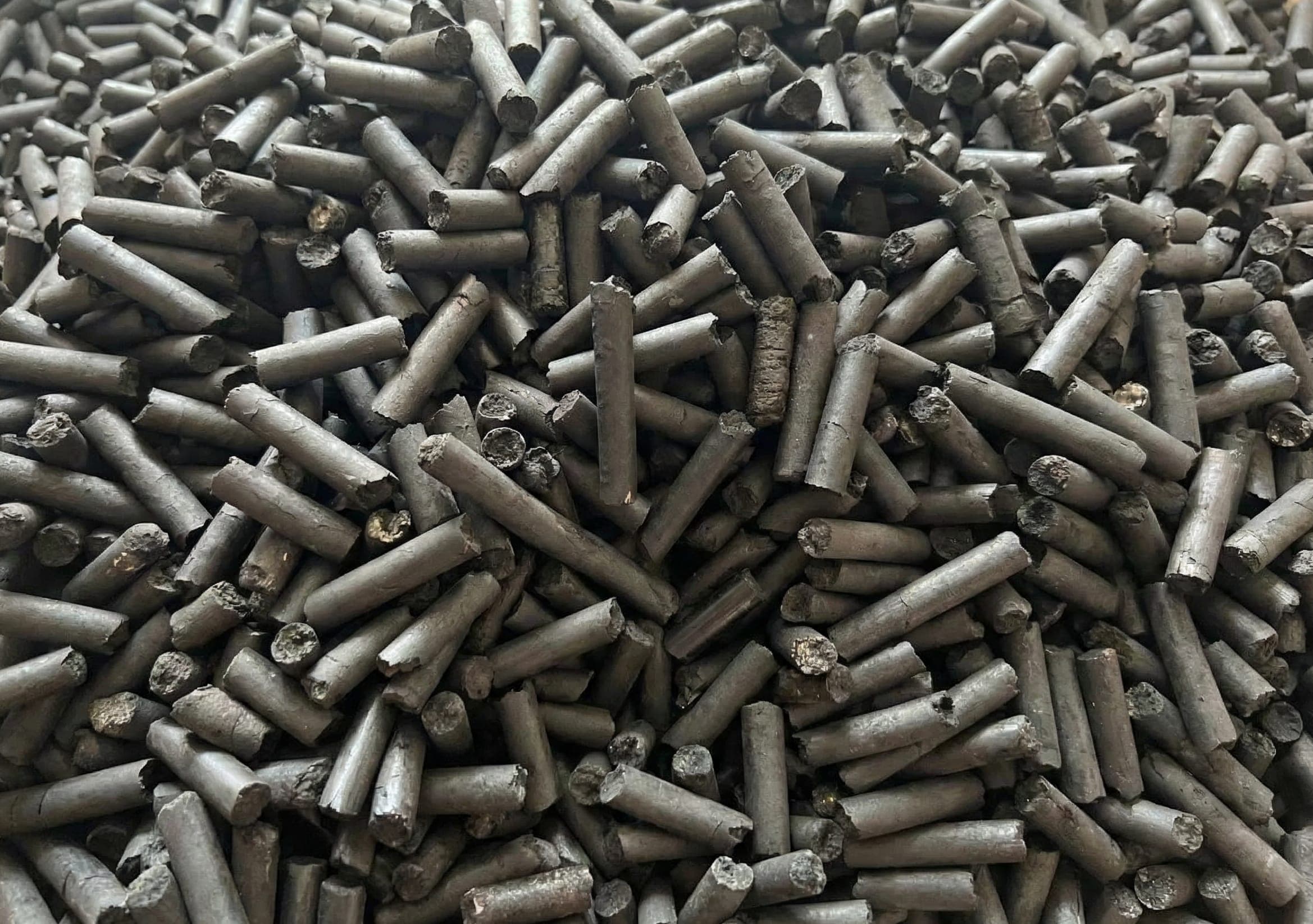
Biochar's permanence stems from pyrolysis chemistry. At 450-650°C in oxygen-limited conditions, biomass transforms into stable polycyclic aromatic carbon structures resistant to biological and chemical decomposition.
Verification standards require:
- H/C ratio < 0.7 (high aromaticity)
- O/C ratio < 0.4 (low oxidation potential)
The European Biochar Certificate (EBC) and Puro.earth require laboratory testing of every production batch, ensuring only verifiably permanent biochar qualifies for premium pricing.
Market Pricing: EUR 80-150/Tonne for Verified Permanent Removal
Q4 2025 / Q1 2026 carbon credit pricing:
Biochar Carbon Removal:
- Puro.earth CORC: EUR 95-135/tonne CO₂
- EBC-certified credits: EUR 80-120/tonne CO₂
- Private bilateral agreements: EUR 100-150/tonne CO₂
- Average: EUR 105/tonne CO₂ (USD $112/tonne)
Regenerative Agriculture:
- Agricultural soil carbon: EUR 12-28/tonne CO₂
- Gold Standard programs: EUR 18-35/tonne CO₂
- Average: EUR 20/tonne CO₂ (USD $21/tonne)
The 5.25x median price differential reflects buyer preference for risk elimination. Corporate sustainability officers increasingly specify "permanent removal only" in procurement.
Why Buyers Pay Premium: Regulatory Drivers
EU Corporate Sustainability Reporting Directive (CSRD): Requires ~50,000 companies to disclose permanence duration. Credits with <100-year storage cannot count 1:1 against emissions.
Science Based Targets Initiative (SBTi): Corporate Net-Zero Standard explicitly recommends permanent removal credits for net-zero claims.
Reputational Risk Management: High-profile controversies around agricultural carbon reversals (tillage events releasing stored carbon, wildfires) make corporate buyers cautious. Permanent removal eliminates reversal risk entirely.
.avif)
Reversal Risk: Why Agricultural Credits Lose Value
Agricultural soil carbon faces four reversal pathways biochar eliminates:
- Tillage Reversal: Single tillage event releases 30-50% of accumulated carbon within 2-3 years
- Fire Risk: 2023 Canadian wildfires released 2.98 billion tonnes CO₂
- Land-Use Change: Economic conditions can incentivize land conversion
- Economic Incentive Reversal: If carbon programs end, farmers may abandon practices
Biochar remains stable regardless of land management, fire events, or economic conditions.
Quantification Advantage
Agricultural soil carbon requires extensive sampling (5-10 samples per hectare), laboratory analysis, and statistical modeling with 2-5 tonnes CO₂/hectare measurement uncertainty.
Biochar quantification is straightforward mass balance:
- Weigh biomass input → measure moisture
- Weigh biochar output → determine yield
- Analyze carbon content (60-80%)
- Measure H/C and O/C ratios → confirm permanence
- Calculate: carbon mass × 3.67 = tonnes CO₂ removed
Zero measurement uncertainty, continuous verification, low-cost credit issuance.
Production Economics: Premium Pricing Enables Industrial Projects
Palm oil mill generating 12,000 tonnes/year empty fruit bunches:
- Biochar production: 3,000-3,600 tonnes/year
- Carbon sequestered: 7,700-10,570 tonnes CO₂/year
- Carbon credit revenue at EUR 100/tonne: EUR 770,000-1,057,000 (USD $820,000-1,125,000)
This revenue alone provides 8-12% annual return on EUR 8-10 million capital investment—before electricity generation or biochar product sales.
Geographic Arbitrage Opportunity
Regional pricing:
- European market: EUR 95-135/tonne (highest globally)
- North American market: EUR 75-115/tonne
- Asia-Pacific market: EUR 45-80/tonne
Southeast Asian and South American producers access European buyers through international registries, capturing EUR 80-150/tonne pricing while operating with production costs equivalent to EUR 30-50/tonne.
Certification: Gateway to Premium Pricing
Puro.earth Requirements:
- Pyrolysis temperature documentation (minimum 450°C)
- H/C ratio < 0.7, O/C ratio < 0.4 verification
- Mass balance documentation
- Biochar end-use tracking
- Annual third-party auditing
European Biochar Certificate:
- Production process monitoring
- Organic contaminant testing
- Carbon stability analysis
- Lifecycle GHG assessment
Certification costs: EUR 5,000-15,000 annually (0.5-2% of revenue).
Future Outlook: Widening Premium
Market developments suggest permanence premium will increase:
- Regulatory tightening: EU taxonomy and CSRD favor permanent removal
- Agricultural credit scrutiny: Measurement controversies shift demand to biochar
- Supply constraints: Production capacity limited vs. corporate demand
- Net-zero deadlines: Corporate targets (2030-2040) increase urgency
Industry analysts project EUR 120-180/tonne CO₂ by 2028-2030.
Conclusion
For industrial operations generating 8,000-50,000 tonnes annually of agricultural/forestry biomass:
Low-Value Pathway: Agricultural soil carbon programs → EUR 10-40/tonne CO₂ → EUR 80,000-2,000,000 annual revenue
High-Value Pathway: Biochar through pyrolysis → EUR 80-150/tonne CO₂ → EUR 640,000-7,500,000 annual revenue
Revenue difference: EUR 560,000-5,500,000 annually
In the global carbon economy, permanence isn't just technical specification—it's a market differentiator worth EUR 70-110 per tonne of CO₂ removed.
References
- Puro.earth. (2025). Carbon Removal Certificate (CORC) Marketplace Price Index Q4 2025. Retrieved from https://puro.earth
- European Biochar Certificate (EBC). (2024). Guidelines for Biochar Production - Version 10.3. European Biochar Foundation.
- Science Based Targets initiative (SBTi). (2023). Corporate Net-Zero Standard: Beyond Value Chain Mitigation. Retrieved from https://sciencebasedtargets.org
- Verified Carbon Standard (Verra). (2024). VCS Methodology: Biochar Utilization in Soil and Non-Soil Applications. Verra Registry.
- European Commission. (2024). Corporate Sustainability Reporting Directive (CSRD): Implementation Guidance for Carbon Credit Disclosure. EU Official Journal.
- Lehmann, J., et al. (2015). Biochar persistence and stability in soil: Evidence from long-term field trials and archaeological analogs. GCB Bioenergy, 7(6), 1333-1345.
- Smith, P., et al. (2024). The role of permanent carbon removal in corporate climate strategies: Evidence from EU compliance markets. Environmental Science & Policy, 145, 215-228.
- International Organization for Standardization. (2023). ISO 14067:2023 - Carbon footprint of products: Requirements and guidelines for quantification. ISO Standards.
- UK Government. (2023). Voluntary Carbon Offsetting Principles: Guidance for Businesses and Organizations. Department for Energy Security and Net Zero.
- Carbon Direct. (2025). State of Carbon Removal Markets 2025. Industry Report.