What Are Carbon Credits? The Currency of the Climate Age
Carbon credits are driving the global transition to net-zero. Learn how they work, why they matter, and how businesses are using them to take real climate action.
How Do Carbon Credits Work?
A carbon credit represents one tonne of carbon dioxide equivalent (CO₂e) that has been removed from the atmosphere or prevented from entering it.
These tradeable certificates have become essential tools in the fight against climate change, allowing businesses to compensate for emissions they cannot yet eliminate while funding projects that actively reduce atmospheric carbon.
Think of carbon credits as proof of climate impact. When a project removes or avoids greenhouse gas emissions, that impact can be measured, verified by independent third parties, and converted into credits that companies can purchase to offset their own emissions.
The Two Types of Carbon Credits
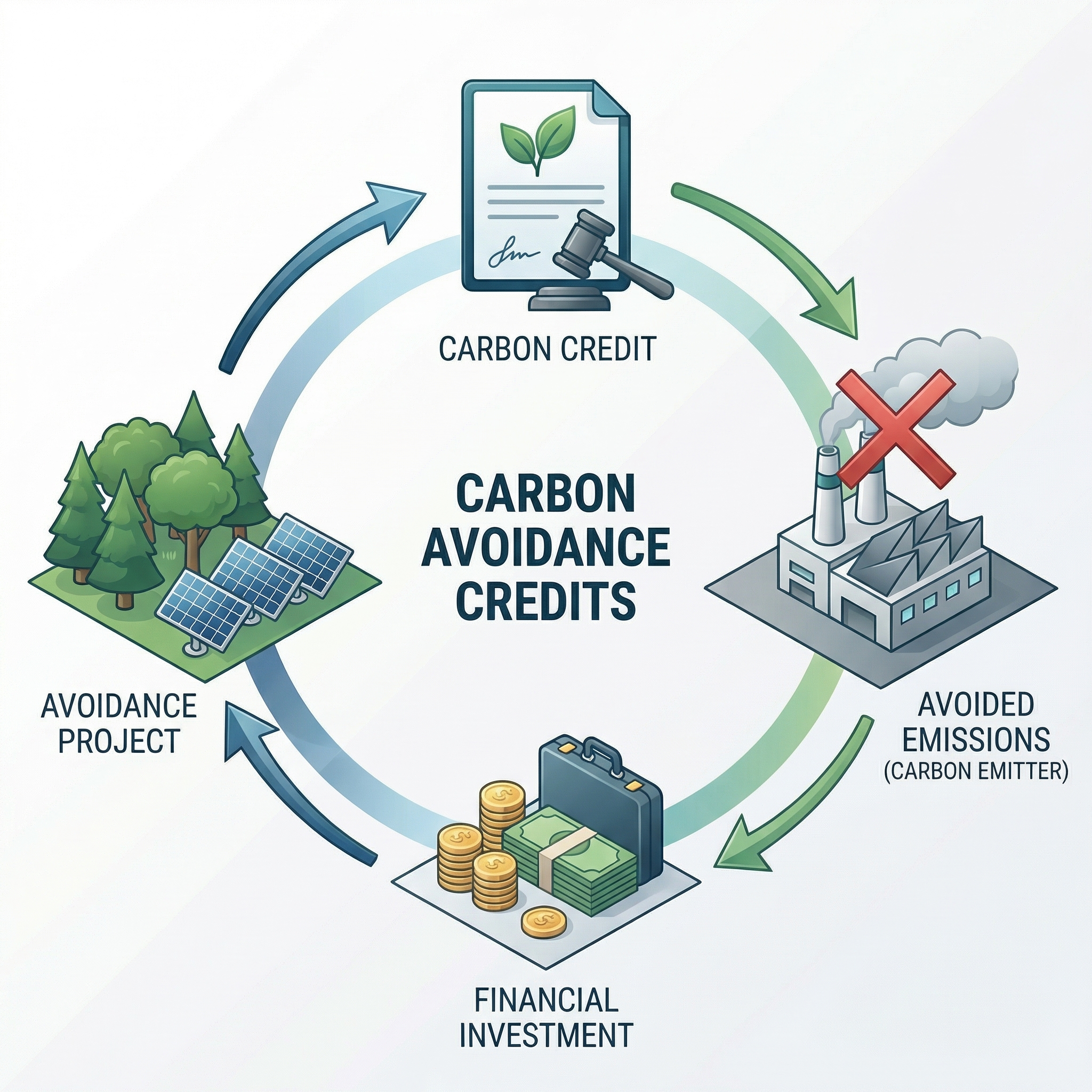
Carbon Avoidance Credits
These credits come from projects that prevent future emissions. Examples include renewable energy projects that replace fossil fuel power, or forest conservation projects that prevent deforestation. While important, these credits avoid emissions rather than removing carbon already in the atmosphere.
Recommended Supplier
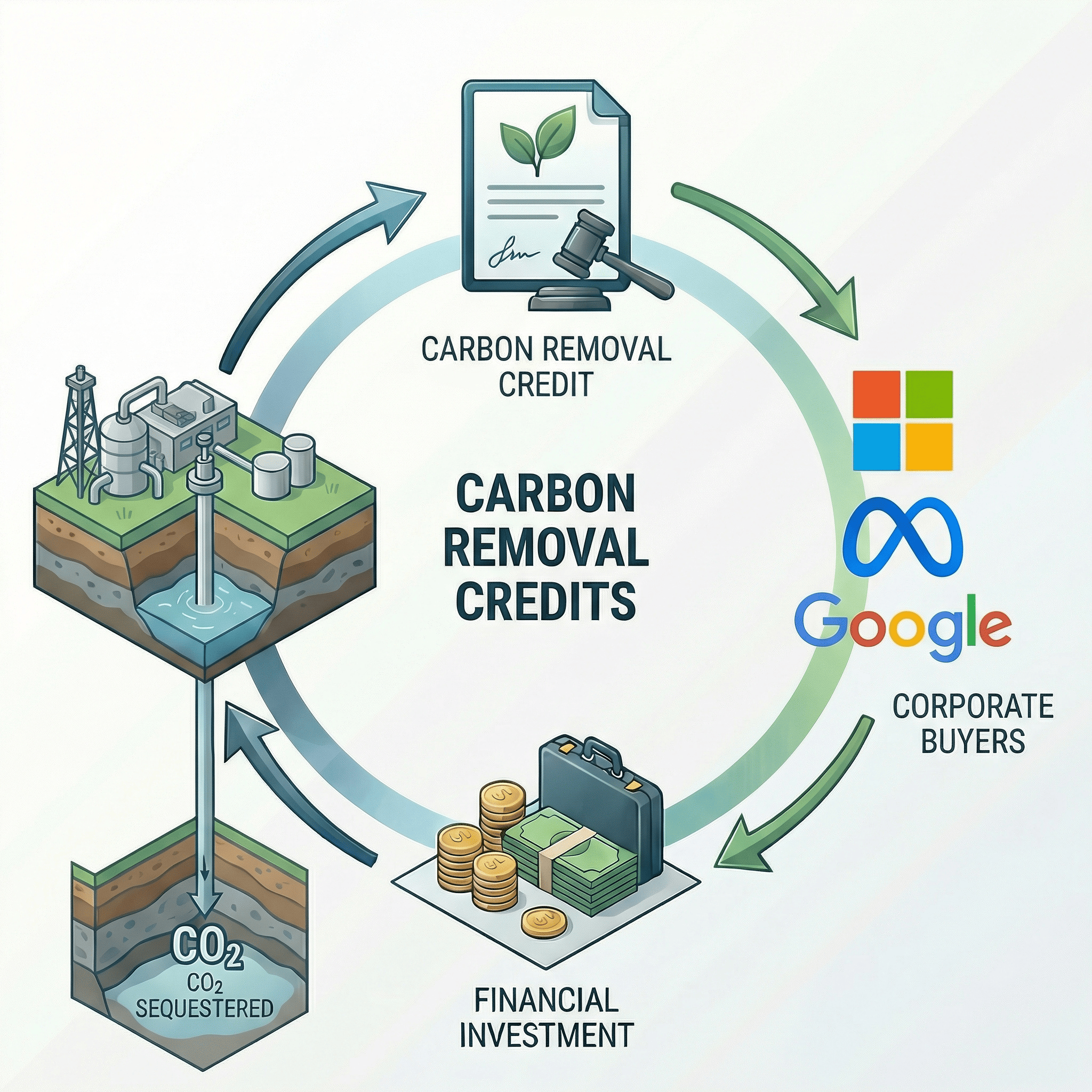
Carbon Removal Credits
These credits represent actual removal of CO₂ from the atmosphere, the gold standard in climate action. Technologies like biochar production, direct air capture, and enhanced weathering pull existing carbon out of the air and store it long-term. As the climate crisis intensifies, removal credits are recognized as essential, not optional.
Recommended Supplier
Why Businesses Buy Carbon Credits
Corporate Net-Zero Strategies
Companies offset unavoidable emissions while transitioning their operations to lower-carbon Strategies
Project Financing
Carbon credit revenue makes climate projects economically feasible
Market-Driven Solutions
As demand for credits grows, prices increase, funding more ambitious projects & innovation
Measurable Impact
Every credit represents verified, audited climate impact
Carbon Credit Verification Standards Not all carbon credits are equal. Reputable credits are verified by independent international standards that ensure:
Additionality
The project wouldn't happen without carbon finance
Permanence
Carbon stays removed/avoided for the long term
No Leakage
The project doesn't just shift emissions elsewhere
Accurate Measurement
Robust monitoring and verification of impact
Leading verification standards include:
The Voluntary Carbon Market in 2026
The voluntary carbon market has grown exponentially, reaching $2+ billion in annual trading as corporations race to meet net-zero commitments. High-quality carbon removal credits command premium prices-often $80-100+ per tonne - reflecting their superior climate impact and permanence. This growth is driving innovation in carbon removal technologies and making previously uneconomic climate solutions viable. As carbon pricing mechanisms expand globally, credits are becoming infrastructure for the net-zero economy.
What's the difference between carbon avoidance and carbon removal credits?
Avoidance credits prevent future emissions (like renewable energy replacing fossil fuels). Removal credits actually extract CO₂ already in the atmosphere and store it long-term. Removal credits are considered higher quality because they reverse existing damage rather than just preventing new emissions.
How much does a carbon credit cost?
Prices vary widely based on credit quality, permanence, and verification standards. Low-quality avoidance credits may trade for $5-20 per tonne, while high-quality removal credits typically range from $80-150+ per tonne. Prices are rising as demand for premium credits increases.
Are carbon credits greenwashing?
Not if used correctly. High-quality credits from reputable registries represent real, verified climate impact. Greenwashing occurs when companies buy cheap, low-quality credits while making exaggerated climate claims, or use credits instead of reducing their own emissions. Credits should complement-not replace-emission reduction efforts.
Which carbon credit standards are most trusted?
The most recognized voluntary market standards are: - Puro.earth (carbon removal specialist) - Verra (VCS) (largest voluntary registry) -Gold Standard (high co-benefit requirements)
Look for credits verified by these registries to ensure quality and integrity.
How long does removed carbon stay sequestered?
Depends on the method. Forestry projects may store carbon for decades but face reversal risks from fires or logging. Biochar and mineralization store carbon for 1,000+ years. Direct air capture with geological storage can be permanent (10,000+ years). Longer permanence = higher credit value.
Can individuals buy carbon credits?
Yes, though most trading happens between businesses. Some registries and brokers sell directly to individuals wanting to offset personal emissions. However, credits are primarily designed for corporate net-zero strategies and large-scale climate action.
What industries buy the most carbon credits?
Airlines, energy companies, technology firms, shipping, and manufacturing are the largest buyers. Any company with hard-to-abate emissions or net-zero commitments is a potential buyer. Voluntary purchases are growing faster than compliance markets.
How do I know a carbon credit is legitimate?
Check for: - Independent verification by recognized standards (Puro.earth, Verra, Gold Standard) - Transparent methodology and monitoring - Clear additionality (wouldn't happen without carbon finance) - Permanent or long-term storage - Third-party audits and public registry listing






.png)


